by Erin Long | Jun 5, 2019 | Uncategorized
For a baghouse to function correctly, system designers need to perform a bag filter calculation. So how do you calculate the air-to-cloth ratio of your bag filters? Some websites offer simple formulas to estimate the correct air-to-cloth ratio. However, a good system designer knows that every application and every material is a little different.
System designers also do a compressed air requirement calculation for bag filters. Because without proper cleaning, bags become covered with dust which throws off the calculated air-to-cloth ratio. Therefore, getting these two calculations right makes sure your baghouse runs at full efficiency.
 How to Calculate Air-to-Cloth Ratio in Bag Filters
An air-to-cloth ratio compares the amount of air going through a square foot of filter area. If you know the total CFM of the system and you know the amount of filter area you have, you can calculate this ratio.
For example, if you have 10,000 CFM through your collector and 5,000 square feet of filter area, your ratio is 10,000:5,000. But it’s much simpler to convert this to a ratio of 2:1. The air-to-cloth ratio can be anything from 1:1 to 3.5:1.
What makes the difference in bag filter calculation? Often, it’s the type of dust that the system collects. Different types of material will change how you calculate the air-to-cloth ratio in filter bags. Most companies that design baghouses know the general cloth area of their filter bags. A filter bag calculation can also be made because filter bags are round. If you know the diameter of the bag, multiply this diameter by 3.14 to get the circumference. (Think back to high school math and the circumference of a circle.)
Therefore, the circumference of the bags (diameter of the bag x 3.14) multiplied by the length of the bag will give you an approximate bag surface area. There are 144 square inches in a square foot. Since the diameter of the bag will be measured in inches, the bag surface area must be measured in inches too. Use this surface area in the air-to-cloth ratio.
Ask the Manufacturer First
You may never need to know how to do these calculations. Fortunately, many filter bag manufacturers know the general surface area of their bags. Also, a system designer usually knows the surface area of bags that need to go in a collector. What you do need to know is why the surface to air ratio matters. Consequently, a wrong bag filter design calculation can result in a collector with a ratio that causes serious problems.
 Importance of Correct Air-to-Cloth Ratio Calculations
The correct air-to-cloth ratio determines the efficiency and life span of your filters. Above all, buying and replacing filters may be the most expensive and time-consuming part of dust collector maintenance. The correct bag filter calculation extends the life span of your filters and keeps them working efficiently. Not having enough cloth for the air in your system results in low filter life and damaged or overloaded filters.
Different materials will require different air-to-cloth ratios. Similarly, different applications also demand changes to the air-to-cloth ratio. An ambient system usually filters the air with a low overall amount of particulate. In contrast, a source capture on plasma cutting collects much more material. Wood, fiberglass, and other materials affect filters differently. Therefore, you should consult with someone who has experience in air-to-cloth ratio calculations for your type of material.
Compressed Air Requirement Calculation for Bag Filters
Even if a system has the correct air-to-cloth ratio, it still needs to clean the filters correctly. For instance, some baghouses are cleaned with airflow from a fan. The fan sizing will be part of the overall system design. Other baghouses use pulses of compressed air to clean the filters. For these, the calculation of compressed air requirements is important.
Compressed air requirement for bag filters determines how long the bags will last and how efficient they will be. Some compressed air cleaning systems are timer operated. This means that pulses of compressed air clean the bag filters at a designed time. Dust collectors can also have differential pressure pulse control. In this case, a rise in the differential pressure triggers a sensor to activate a pulse. The compressed air only pulses when the filters need it. This means that the compressed air requirement for the baghouse is lower.
The size of the piping and valves used can also affect the compressed air. A baghouse should be operated with the bag filters, valves, and other equipment that came with the system, or an appropriate replacement from the manufacturer.
Valves and other parts of the compressed air system can develop leaks and waste compressed air. As a result, there will be less efficient pulsing. Therefore, systems should be checked regularly for any leaks or failing valves. The compressed air requirement calculation for bag filters is only accurate if the entire system operates as designed.
Read more about bag filters here.
Read more
by Erin Long | May 30, 2019 | Uncategorized
Manganese is a common metal, and the human body needs it in very small amounts to stay healthy. However, excessive manganese exposure causes serious neurological problems. This is most likely to happen to welders and other metalworkers. You can find manganese as an alloy in steel and sometimes aluminum. Consequently, welding or cutting these metals can release dangerous amounts of manganese.
Limits are already low on health hazards like beryllium and respirable crystalline silica. Manganese is likely to be one of the next materials to see increased regulation. It’s not the only welding exposure that workers need to be concerned about. But it’s another good reason to manage weld fume exposure.
Where would I find manganese in metalworking?
Modern steel production relies on manganese to remove oxygen and sulfur compounds. Many types of steel include it because as an alloy, it makes steel stronger. This means that welding or cutting fumes from steel are likely to contain manganese. In addition, welding manganese exposure can come from manganese contained in welding rods.
Manganese is also used as an alloy with aluminum, where it protects from corrosion. This is not a major source of exposure for metalworkers in general, though. This type of aluminum alloy is popular for food and beverage containers.
What are the limits on manganese exposure?
OSHA’s limit on manganese exposure is 5mg/m3 over an eight-hour workday. NIOSH, the research branch of OSHA, has looked at recent studies. As a result, they recommended a limit of no more than 1mg/m3 over the same period of time.
One research study in 2016 found that over many years of working as a welder, manganese could cause serious neurological symptoms. This is true for exposure levels as low as mg/m3 . The study also found that higher levels of welding exposure to manganese caused more symptoms.
This research shows that just following OSHA regulations may not be enough to prevent manganese exposure symptoms from metalworking.
What are some manganese exposure symptoms?
Manganism is the most severe symptom. This condition of manganese exposure looks like Parkinson’s disease. Specifically, one experiences tremors, balance problems, weakness, and problems with muscle control. Following current OSHA standards, exposure should not be high enough to cause this condition.
However, many researchers find that even at exposure levels much lower than OSHA standards, welders still develop symptoms. Said researchers include the Washington University School of Medicine. These manganese exposure symptoms include muscle stiffness in arms and legs and problems with balance and coordination.
Symptoms take time to appear and usually happen after years of exposure. Although, one could attribute them to just getting old. For this reason, research is needed to show that manganese exposure could cause them.
NIOSH reviewed research on occupational health hazards, leading to a recommendation of lowering the exposure limit. Their findings indicate that welders develop these symptoms faster and more severely than non-welders. Most importantly, even at levels much lower than OSHA standards.
How do you control metalworker exposure to manganese? 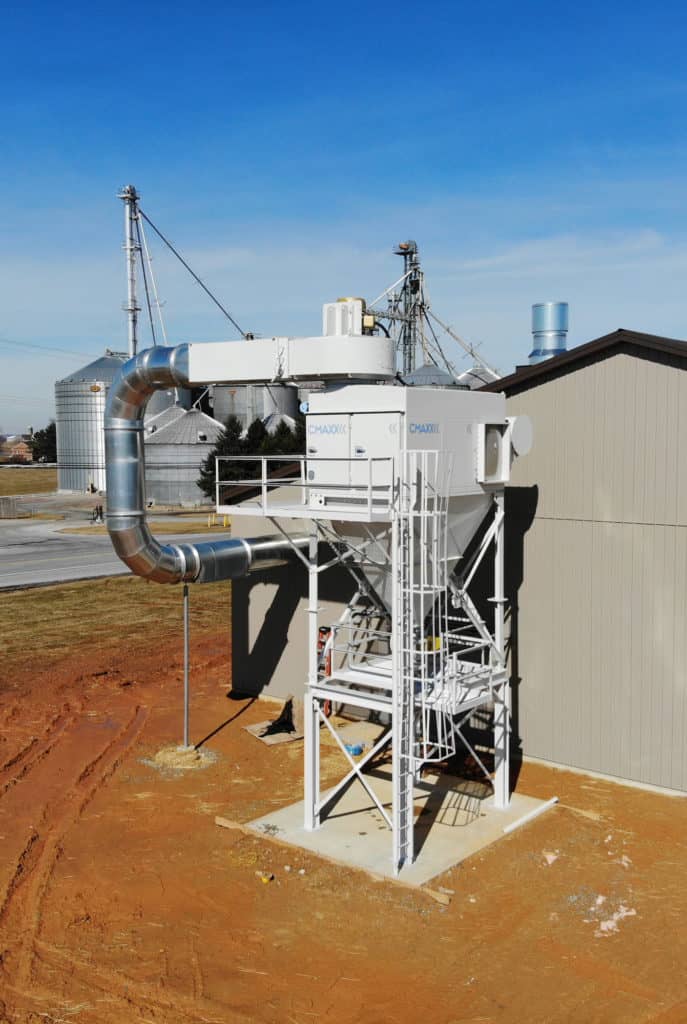
Fumes from welding and cutting metal are hazardous to breathe. Manganese exposure is just one concern. However, because it can cause neurological damage at very low levels, it’s an important issue.
Manage exposure to weld fumes with a well-designed dust and fume collection system. One solution is to use hoods, fume arms, or downdraft tables. These are all types of source capture, and they clear the air around the welder’s breathing space.
Many laser or plasma cutting tables are also downdraft tables and pull fumes down and into the dust and fume collection system.
Fumes can escape from welding stations or cutting tables. An ambient system can filter all the air in the workplace to remove these escaped fumes. As a result, the haze of smoke that some facilities have in the work area is eliminated.
To prevent welders and other metalworkers’ exposure to manganese and other hazardous fumes, contact Imperial Systems. You can also visit the product page to learn more about the CMAXX dust and fume collector.
Read more

by Erin Long | May 23, 2019 | Uncategorized
Dust Safety Science Podcast: Changes in the Dust Collection Equipment Landscape with Jeremiah Wann
 “In this episode of the DustSafetyScience Podcast, we interview Jeremiah Wann, President of Imperial Systems, Inc., in Mercer, Pennsylvania, about changes in the dust collection equipment landscape.
Imperial Systems, Inc. is a manufacturer of dust collection equipment and related safety systems. In his position as president of the company, Jeremiah has seen a lot of changes in the field over the past couple of decades, so he talks about:
- How the landscape has changed for dust collectors and other dust-related safety equipment
- How awareness has increased among his clients
- The importance of getting your equipment tested as a manufacturer
- Difficult situations where the customer is hesitant about installing combustible dust safety equipment
Jeremiah’s discussion has immense value because he brings a different perspective to the combustible dust safety issue. He is not a consultant, and he doesn’t serve on any NFPA boards. He is representative of a group that includes facility managers, equipment operators, equipment manufacturers, and insurance companies, and has an experience-based understanding that has enabled him to write several blog posts about combustible dust standards and measurement systems.”
Read more
by Erin Long | May 15, 2019 | Uncategorized
In 2008, the OSHA National Emphasis Program on Combustible Dust became official. As a result, this left many people asking what a “national emphasis program” means. Does it require businesses to take any action? Moreover, does it create any new fines or penalties?
One thing has become clear since 2008: the National Emphasis Program OSHA instituted has some teeth. While businesses cannot be fined under the Combustible Dust NEP, OSHA inspectors are using other regulations to fine companies for combustible dust issues.
Why did they create the National Emphasis Program?
Safety organizations like the Chemical Safety Board have been pushing for an OSHA combustible dust standard. To this end, they cite several disasters related to combustible dust. In many of these cases, the obvious hazards should have been addressed.
The strongest push came after three major accidents that all happened in 2003. First, West Pharmaceuticals had plastic dust accumulated in the ceiling which ignited, killing six people. Second, CTA Acoustics had a buildup of resin dust which caught fire and caused seven fatalities. Third, Hayes Lemmerz suffered multiple explosions of aluminum dust. Aluminum dust is a well-known hazard that should be managed.
The OSHA NEP did not create any new standards. But it did inform federal and state inspectors how they could focus on combustible dust and standards that already existed. Companies should already be following these standards. So inspectors can issue fines for them.
The OSHA National Emphasis Program also creates educational materials about combustible dust. These are available on OSHA’s website. They explain the basics of combustible dust hazards and ways to reduce the risks.
What does the OSHA National Emphasis Program do?
The OSHA NEP puts a focus on inspecting companies that handle or create combustible dust. There is no specific combustible dust rule that OSHA can fine a company for violating. However, under this program, OSHA has been issuing some serious fines using existing rules.
Federal inspectors found over 4,900 infractions during combustible dust related inspections. This is according to OSHA in the year after the National Emphasis Program was put into place. Since there is no specific combustible dust standard to violate, most of the violations fell into these categories:
How do these rules relate to the OSHA National Emphasis Program and combustible dust?
Hazard communication rules state that for any hazardous material, there must be plans in place for handling it. The employer must communicate this plan to all employees. Further, everyone must be aware of the steps for handling the material safely.
Employers may be in violation of this rule if they do not make their employees aware of a combustible dust hazard. In addition, they must implement a plan for managing the hazard.
Housekeeping rules and combustible dust make sense. The OSHA NEP can be enforced when a facility fails to keep up with housekeeping. For example, keeping dust off floors and flat surfaces. Allowing combustible dust to gather causes many dust explosions. At the same time, this provides fuel for secondary explosions.
Citations for electrical issues related to combustible dust focus on faulty electronics or wiring. As a consequence, these could provide an ignition source for combustible dust. Airborne dust that meets an electrical spark can ignite and cause an explosion.
Personal protective equipment (PPE) citations under the OSHA NEP happen when workers are exposed to various dust hazards without PPE. This might include respirators or skin protection.
OSHA has many rules involving the placement and inspection of fire extinguishers. Likewise, employers can be cited during an OSHA NEP inspection for breaches of these.
Hazard-free Workplace
The General Duty Clause states that an employer “shall furnish to each of his employees a place of employment which is free from recognized hazards that are causing or are likely to cause death or serious physical harm to his employees”.
This is very broad. Under this rule, the OSHA National Emphasis Program can cite employers for any situation that puts employees at risk, including combustible dust.
One major reason? “OSHA found that the majority of facilities inspected under the NEP had dust collectors located inside the buildings without proper explosion protection systems”.
What does the OSHA Combustible Dust NEP mean for employers?
The National Emphasis Program does not put any new rules on employers. However, it does allow OSHA inspectors to inspect based on possible combustible dust hazards. This means that any type of workplace handling combustible dust can face an OSHA NEP audit.
If you have no safety violations in any of the areas listed above, you probably will not be cited under the OSHA Combustible Dust NEP. Most of OSHA’s citations under this standard have been “serious” or “willful.” In other words, putting employees in real danger or knowingly ignoring an existing hazard.
To make sure, now would be a good time to contact Imperial Systems, Inc about our ServiceMAXX program. We can inspect and review your existing dust collection system. Then you can address problems to make sure employees and the workplace are safe.
Read more
by Erin Long | May 3, 2019 | Uncategorized
In honor of Air Quality Awareness Week, we’re focusing on environmental air quality, indoors and out. When talking about dust and fume collection systems, we often discuss OSHA regulations for exposure inside the building. However, EPA regulations on dust and fume control limit what can be released into the environment.
Air quality control inside a facility protects worker health. It also protects the facility from combustible dust hazards. The same hazardous dust and fumes that could harm workers inside, though, could also contaminate environmental air quality outside.
Metal Contaminants from Industry
Many industrial processes produce heavy metal contaminants. Many people think of foundries, mining, and steel mills when they hear about environmental air quality. However, fumes released from many processes can cause contamination in the environment. For example, metalworking, battery manufacturing, and smelting can be added to the list of potential polluters.
Metals that are dangerous in very small amounts include:
- Lead
- Arsenic
- Cadmium
- Mercury
- Chromium (hexavalent chromium)
- Nickel
- Zinc
- Copper
Very fine metal particles produced by industrial processes are the most harmful for environmental air quality. They can be carried for long distances in the air. Moreover, this means they may contaminate soil and water a long way from the source.
Many of these metals are known or suspected to cause cancer. Further, others like lead and mercury cause damage to the nerves and brain.
Some companies may not realize that their fumes include these metals. However, metals like steel can contain nickel, zinc, chromium, or other materials as alloys. These are good reasons to have a dust and fume collection system to protect workers at the facility… but what about the environment?
Dust and Fume Control for Environmental Air Quality
Removing dust and fumes from a building doesn’t make them disappear. These materials are harmful because they can remain floating in the air for people to inhale. They can also end up in water supplies or contaminate the soil.
All manufacturing companies are responsible for air pollution control in their facilities. To prevent air pollution from industrial processes, dust and fumes must be captured with air filtration. Dust collection systems serve double duty: they provide clean air inside the facility and trap harmful materials before they can get outside.
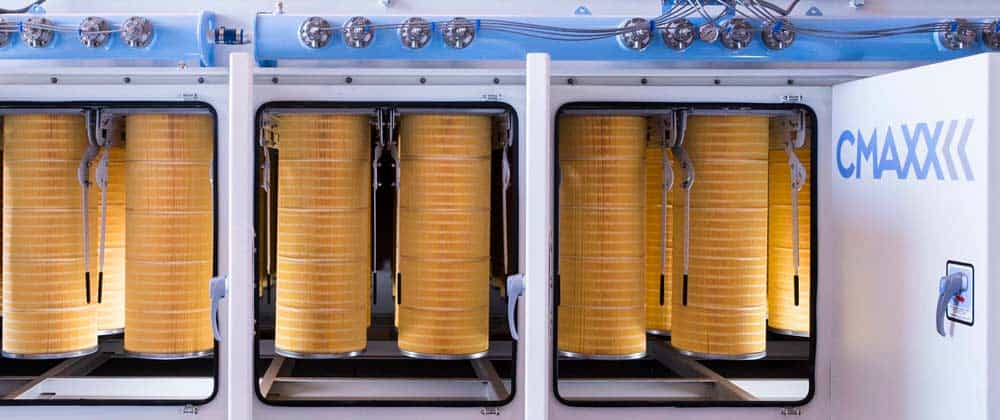
Part of preventing air pollution is the quality of dust collector filters. Filters need to be efficient enough to capture the smallest particulates the process creates. DeltaMAXX nanofiber filters capture particles as small as 0.3 microns, enough for most applications. If higher filtration is needed, HEPA after-filters can be used.
By capturing dust and fumes instead of blowing them outside, companies take responsibility for preserving environmental air quality. People who live and work near industrial areas need to be protected from harmful air pollution.
Maintaining environmental air quality improves people’s lives. Companies who invest in a dust and fume collection system can be proud that they are protecting their workers and protecting the environment. The “we just open the doors and blow it outside” philosophy might get dust and fumes out of the shop, but it passes the danger on to others. We are all responsible for what we put into the air, water, and soil around us.
Read more
by Erin Long | Apr 30, 2019 | Uncategorized
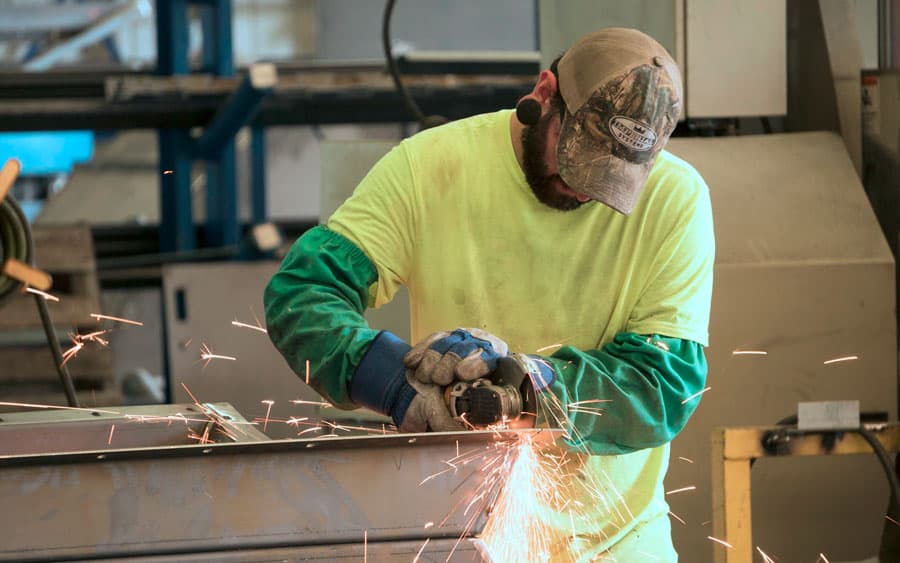
An industrial fabrication shop like Imperial Systems needs its skilled tradespeople. When you see pictures of our facility, you see lots of welders and other metalworkers. These people are certainly the backbone of any fabrication company. But pictures don’t always do justice to the many other skilled trades needed to keep our business moving.
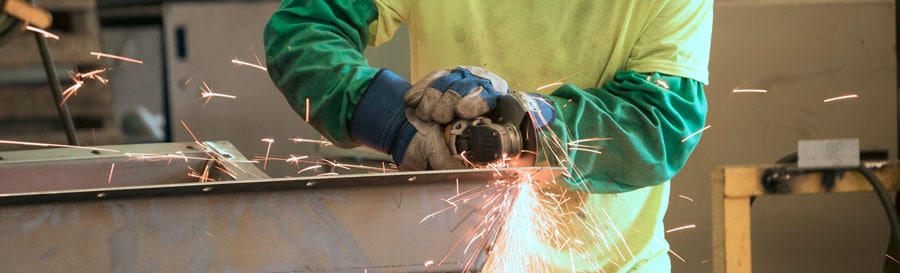
Skilled Trades: Metalworking in Our Fabrication Shop
Our company would not exist without our metalworkers and other skilled tradespeople on the shop floor. In other words, our dust and fume collection equipment would just linger as a pile of sheet metal. Some of the skilled trades at work in our fab shop are:
- Welders
- Grinders
- Machine operators
- Plasma cutting operators
- Powder coating
- Maintenance and repair
- Assembly
Repair and maintenance also include our constantly traveling ServiceMAXX teams. These teams perform everything from filter changes to electrical work.
Things also wouldn’t get far on the shop floor without the managers. These include the plant manager, production manager, supply chain manager, and shipping manager. They are very experienced and skilled people. Above all, they keep fabrication going smoothly and orders going out on time.
Before a job makes it out for fabrication, it goes through the engineering team. These professionals transform the system that the customer wants into instructions for the fabrication shop to build it. Then our skilled tradespeople turn a drawing into a CMAXX or a BRF.

Other Skills: Keeping Things Running Behind the Scenes
A fab shop needs more than skilled metalworkers and shop managers to function as a business. For example, our accounting team handles money going in, money coming out, and any issues in between. They make sure we all get paid, obviously an essential task. They also do double duty handling many human resources functions like benefits and new employee paperwork.
You might not think that a fabrication shop would need a software engineer. But a person with this skill is essential to keeping things running. Everything from sales to shipping relies on a working computer system. In addition to his programming work, our software engineer is always willing to help keep computers and servers running.
You’re probably not surprised that a metal fab shop needs a team of salespeople. Without their work, the shop might not have dust collectors to build. While salespeople don’t go to school to learn sales, there’s a lot of training that goes into being good at this trade.
Our equipment salespeople and aftermarket salespeople must be experts in our products. Equipment salespeople travel frequently to meet potential customers. Aftermarket salespeople maintain our good relationships with customers and help them solve problems.
All those product brochures and blog posts and logos don’t appear from nowhere, either. Graphics design experts are skilled tradespeople who create our brand’s image. Even an industrial fabrication company needs to look professional.
Our graphic design team works with the company content writer. She writes features like our company newsletter and articles published in magazines. Content writing is a mix of skills, including writing, researching, and optimizing website traffic.
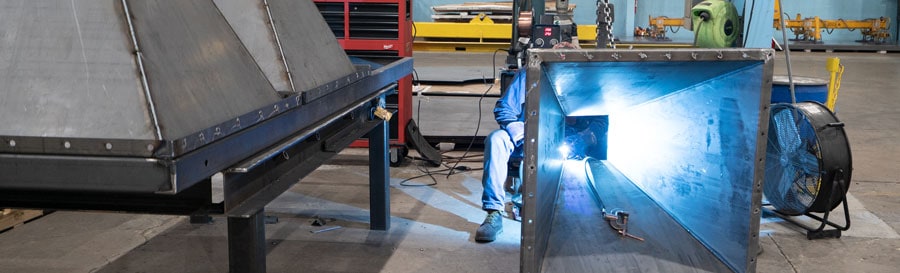
Our Fabrication Shop: Many Skills, One Working Company
Our company needs a mix of skilled tradespeople and many other jobs. Industrial metal fabrication relies on its skilled trades metalworkers. Behind the scenes, though, there’s a team of other people working to keep the company running.
Get a professional degree, learn a skilled trade, or make your own career path. A company like ours has a place for you. Without our skilled tradespeople, products wouldn’t get built and our fabrication company wouldn’t exist.
Many industries, not just metal fabrication, owe much of their success to people in the skilled trades. From medical to construction to electronics, skilled trades drive industry. Remember: many supervisors, managers, and even company owners got their start in skilled trades!
Read more