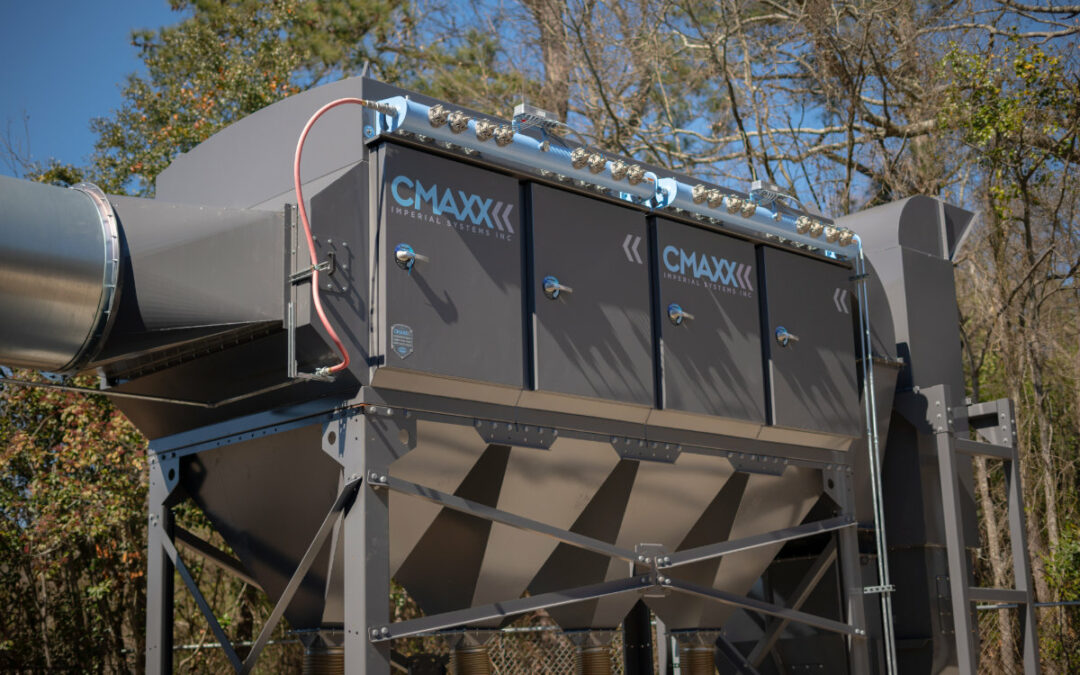
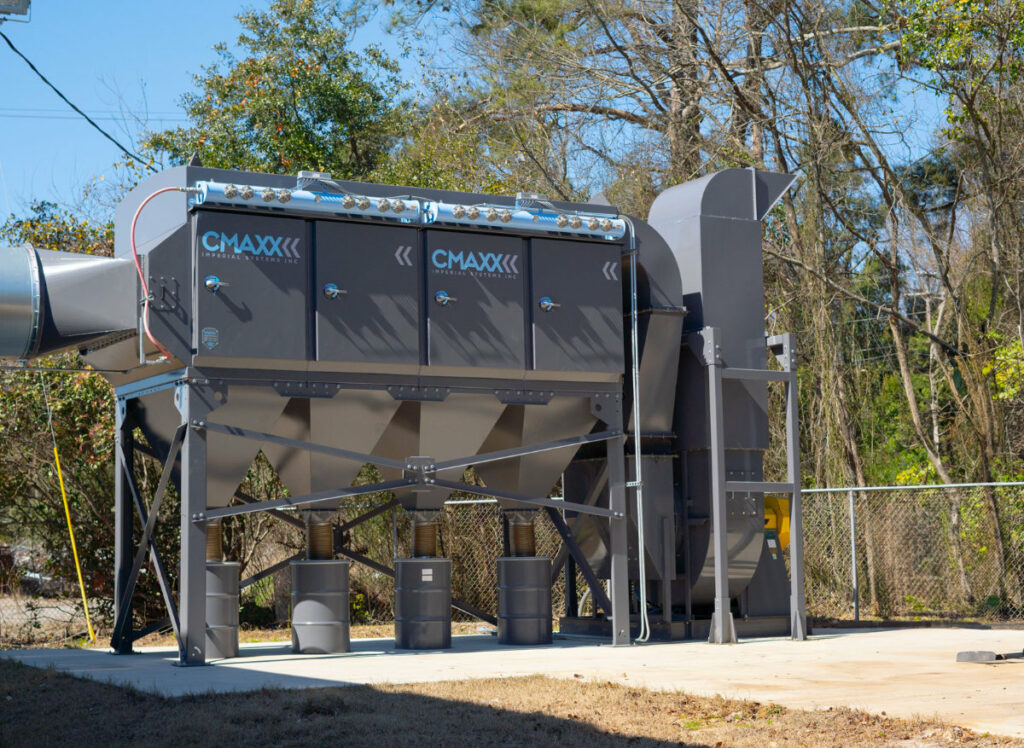
Integrated spark arrestors are a critical safety feature in portable weld fume collectors. They intercept hot sparks and molten metal particles before they can reach the filter media – preventing fires, protecting equipment, and keeping workers safe.
Why sparks are a serious hazard in welding environments
Welding generates more than just harmful fumes — it also produces hot sparks and molten metal spatter that travel through the air at high velocity. When a portable dust collector is used for weld fume extraction, these particles are pulled directly into the unit’s airstream. Without a means of stopping them, sparks can reach the internal filter media, which is typically made from synthetic or cellulose-based materials that can be highly flammable.
A single unimpeded spark reaching a loaded filter can ignite a fire inside the collector — one that may go undetected until it has grown significantly. In confined industrial spaces, this poses an immediate risk to personnel and surrounding equipment.
What is an integrated spark arrestor?
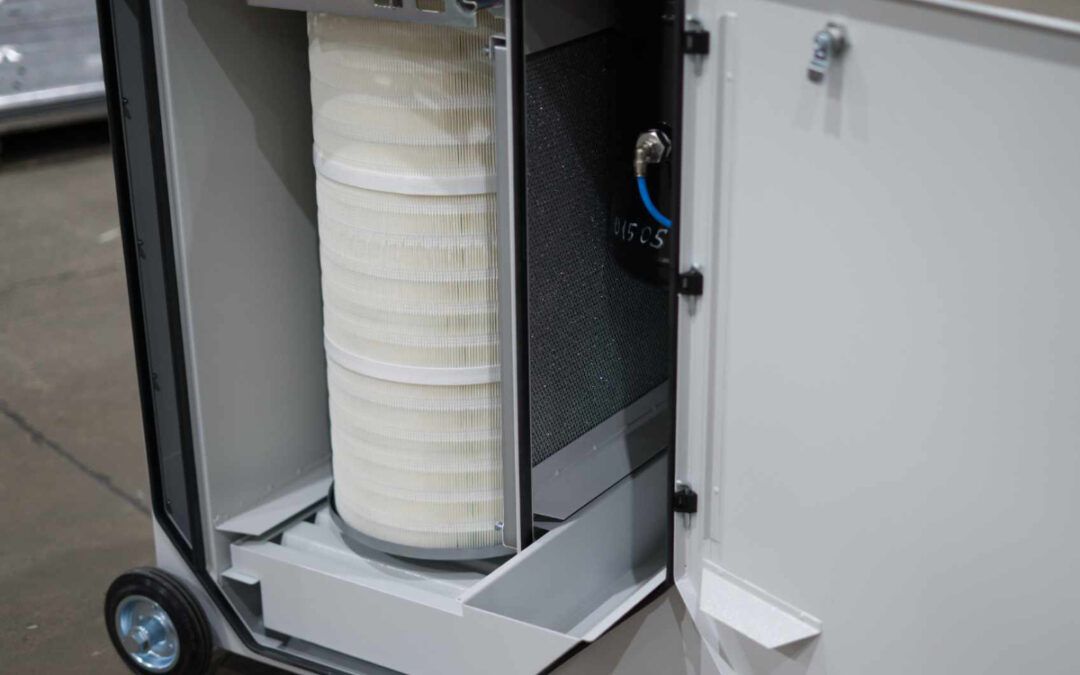
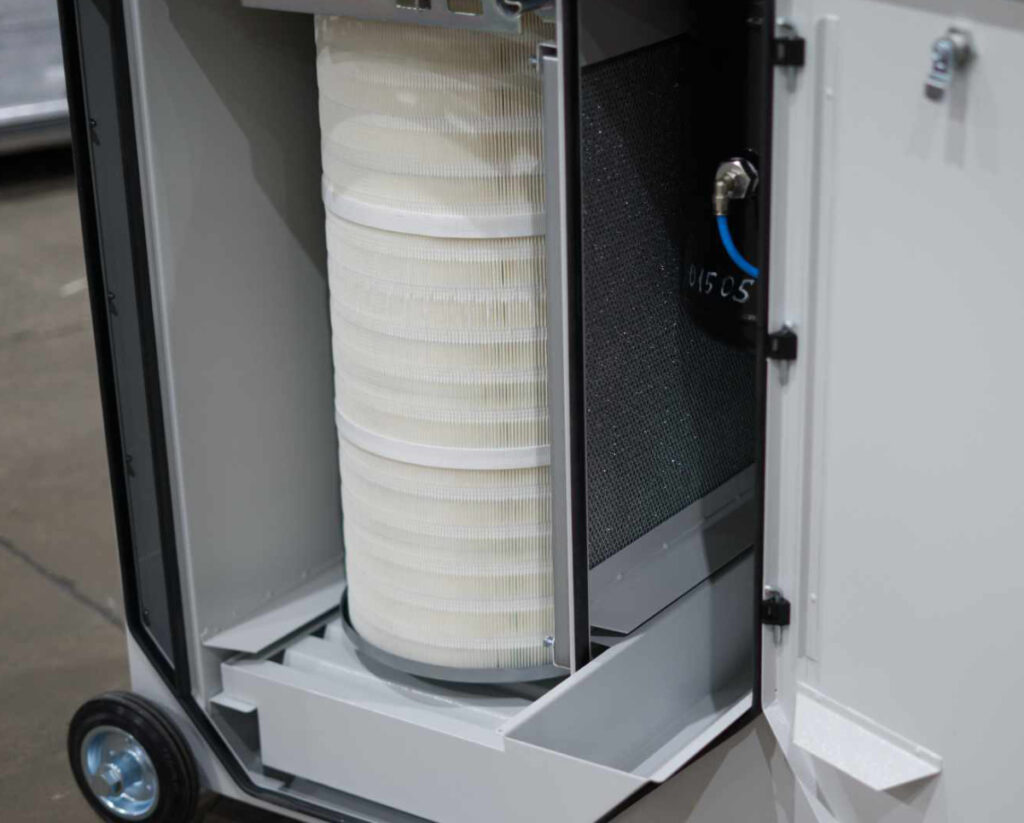
An integrated spark arrestor — also called a spark trap — is a device built directly into the inlet of a portable fume collector. Rather than being an external add-on, it is engineered as part of the unit’s airflow path. As contaminated air enters the unit, the spark arrestor creates turbulence, causing heavier particles (including sparks and metallic debris) to lose momentum and fall into a collection tray below. The airstream — now free of most combustible particles — continues on to the filter media.
In fixed, ducted dust collection systems, spark arrestors are commonly installed as a separate inline device within the ductwork — positioned between the pickup point and the collector to intercept sparks before they travel through the system. Portable weld fume collectors, however, have no duct line. The unit connects directly to the source capture hood or arm, which means there is no intermediate section of duct in which to install a standalone arrestor. For a portable collector, integration into the unit itself is not just a convenience — it is the only viable way to provide spark protection.
Key ways integrated spark traps improve safety
1. Filter fire prevention
By capturing sparks before they reach the filter, integrated spark traps eliminate the most common ignition source inside portable collectors. This dramatically reduces the risk of internal filter fires, which are difficult to detect and suppress quickly.
2. Extended filter service life
Hot particles don’t just ignite filters — they also degrade filter media over time through thermal damage. Removing sparks from the airstream before they contact the filter preserves media integrity, reduces replacement frequency, and lowers operating costs.
3. Protection against secondary combustion
In environments where combustible dust accumulates alongside weld fumes — such as metal grinding operations — a spark reaching a dust-laden filter could trigger not just a fire, but also an explosion. An integrated spark trap addresses this multi-hazard risk at the source.
4. Compliance with safety standards
NFPA 484 (for combustible metals) and OSHA’s general duty clause both require employers to control fire and explosion hazards. Using a portable collector with an integrated spark arrestor is a straightforward step toward meeting these obligations in welding and metalworking environments.
Why “integrated” matters — not just any spark trap
An integrated spark arrestor is engineered into the collector itself — it cannot be accidentally omitted, and it’s designed to work in coordination with the unit’s airflow dynamics for maximum efficiency.
For portable units that move between workstations or job sites, this built-in reliability is especially important. A collector that travels from one work station to another needs consistent, dependable spark protection regardless of how it’s set up on any given day.
Choosing a portable fume collector with spark protection
When evaluating portable weld fume collectors, confirm that spark arrestor functionality is built into the unit’s inlet design — not offered as an optional accessory. Look for units that include a dedicated spark collection chamber that can be emptied safely, and verify that the arrestor is rated for the types of welding processes used in your facility (MIG, TIG, stick, plasma cutting, and grinding all produce varying levels of spatter and heat).
Integrated spark protection isn’t a premium feature — it’s a baseline safety requirement for any portable dust collector used in a welding environment. Specifying it from the start is far less costly than managing a filter fire or explaining an incident to a safety inspector.
Metalworking facilities generate significant amounts of dust, smoke, fumes, and other airborne particles during everyday operations. Processes such as welding, laser and plasma cutting, grinding, and finishing all release contaminants that can affect worker health, damage equipment, and create regulatory compliance risks. Selecting the right industrial dust collection system for a mid-sized metalworking facility is essential for maintaining a safe, efficient, and compliant operation.
Understand Your Metalworking Processes
While every facility is different, there are several key factors metalworking operators should evaluate before investing in a dust collection system. The first step in selecting a dust collector is identifying the specific processes generating dust or fumes.
Common sources of airborne contaminants in metalworking shops include:
Welding smoke/fumes containing fine metal particles
Laser and plasma cutting smoke with ultra-fine particulates
Grinding and finishing dust generated from abrasive materials
Shot blasting debris from surface preparation
Each of these processes produces particles with different sizes, temperatures, and characteristics. For example, welding fumes are extremely fine and spread easily with air currents and require high-efficiency filtration, while grinding operations typically produce larger heavier particulate that need to be captured in a different way, but may not require as high efficiency in the filters.
In most metalworking environments, cartridge-style dust collectors are the preferred solution because they provide excellent filtration efficiency and strong airflow in a compact footprint.
Determine Airflow Requirements (CFM)
One of the most important specifications when evaluating industrial dust collection systems for metalworking facilities is airflow, typically measured in cubic feet per minute (CFM).
The required CFM depends on several factors:
Number of dust-producing machines
Size and design of the ductwork that will run to the dust collector
Type of collection points (hoods, downdraft tables, extraction arms)
Particle characteristics
Mid-sized facilities often require systems ranging from a few thousand CFM for localized extraction to well over 100,000 CFM for centralized systems serving multiple production lines.
Considering Source Capture vs Ambient Collection
Another key decision is how dust, smoke, and fumes will be captured. This should take into account the processes that are producing dust, the capture velocity required, and the size of the spaces they are in.
Source capture systems remove contaminants directly at the point where they are generated. This includes welding fume extraction arms, plasma cutting table hoods, and grinding station downdraft tables.
This approach is often considered the most effective because it prevents contaminants from spreading through the facility. Often the manufacturing process makes source capture difficult, or impossible to do so alternatives might need to be considered.
Some facilities also benefit from ambient air filtration systems, which continuously circulate and filter the air throughout the shop. Ambient systems may be the best option for facilities making large pieces where the work zone is continuously moving.
Evaluate Filtration Efficiency
Metalworking dust can be extremely fine, especially when generated by cutting or welding processes. High-efficiency filtration is essential to ensure these particles are properly captured.
Cartridge dust collectors are widely used in metalworking because they offer a combination of features not available in baghouse units. These include:
Large filtration surface area
High filtration efficiency
Compact equipment footprint
Easy filter replacement and maintenance
Advanced cartridge filters can capture particles well below 10 microns, which is critical for controlling welding fumes and other fine particulates.
Review Safety and Compliance Requirements
Dust collection systems also play an important role in regulatory compliance and facility safety. These regulatory agencies may include OSHA, EPA, and the NFPA. The National Fire Protection Association (NFPA) for example publishes standards related to combustible dust hazards. While many dusts may not be flammable or combustible, certain materials such as aluminum or magnesium can present explosion risks if not handled properly.
When evaluating a system, facilities should consider:
Spark mitigation strategies
Explosion venting or suppression systems (when applicable)
Proper duct design and grounding
Safe dust disposal methods
Consulting experts familiar with applicable NFPA guidelines can help ensure that systems are designed with safety in mind.
Plan for Maintenance and Long-Term Performance
Industrial dust collectors are long-term investments. Beyond initial system performance, facilities should also evaluate maintenance requirements.
Key considerations include:
Filter change intervals
Accessibility for maintenance
Cleaning mechanisms (such as reverse pulse jet cleaning)
Replacement part availability
A well-designed cartridge dust collector should provide consistent airflow while minimizing downtime and maintenance costs.
Work With Dust Collection Experts
Selecting the right industrial dust collection system for a mid-sized metalworking facility requires careful evaluation of processes, airflow requirements, safety considerations, and future expansion plans.
While general guidelines can help narrow down options, every facility has unique challenges that require customized system design.
Dust collection manufacturers with experience in metalworking applications can recommend solutions ranging from compact fume extractors for individual workstations to large centralized collectors capable of handling more than 200,000 CFM of airflow.
For example, many metalworking facilities rely on cartridge-style systems to control airborne dust and fumes efficiently. Imperial Systems has designed a range of collectors to control airborne dust and fumes. The CMAXX Dust & Fume Collector and Shadow Compact Fume Extractor are commonly used in metalworking applications, as well as the Shadow Ambient Dust Collector in applications that allow for ambient filtration solutions.
If you’re planning a new installation or upgrading an existing system, working with experienced professionals can ensure the equipment is properly sized, configured, and compliant with applicable standards.
A dust collection system is one of the most important pieces of equipment in any manufacturing facility. When something goes wrong, production slows down, air quality suffers, and operating costs begin to climb. The good news is that most common dust collector issues can be identified early with a few simple checks. If you’re working to troubleshoot a dust collector that isn’t performing the way it should, here are the key areas to inspect and what each issue might tell you.
1. Check Your Differential Pressure
Differential pressure (DP) is usually the first indicator of a problem. A higher than normal DP often means your filters are loaded, damaged, or not cleaning effectively.
Possible causes:
Filters are nearing the end of their life
Pulse cleaning system is not functioning
Compressed air supply is too low or contaminated
Incorrect filter media for the application
Moisture or oil present in the compressed air line
Water intrusion from leaks allowing rain or runoff into the dirty-air ducting
If your DP is unusually low, this could indicate torn filters, missing filters, or leaks in the system.
2. Inspect the Filters
Filters are the heart of your dust collector. When they fail, your entire system suffers.
Look for:
Holes, tears, or abrasions
Excessive dust cake or plugged pleats
Signs of moisture or oil contamination
Improper seating or faulty gaskets
If you notice dust coming from the collector or uneven filter wear, it may be a sign of an internal filter leak or improper filter installation.
3. Verify Pulse Cleaning Operation
If the filters are not cleaning correctly, they will quickly clog.
Check the following:
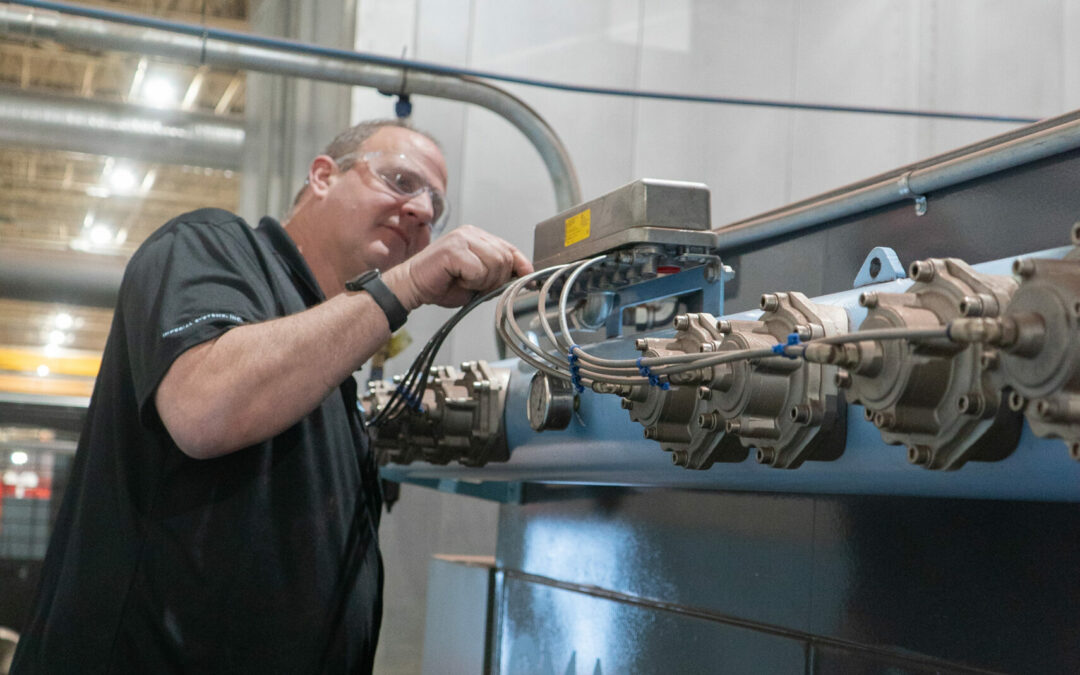
Are solenoid valves firing consistently?
Is the diaphragm in good condition?
Is the compressed air dry, oil-free, and set to the correct PSI?
Are pulse nozzles aligned with the filter openings?
Any interruptions in cleaning will cause your DP to climb and your airflow to drop.
4. Examine the Airflow
Poor airflow is one of the most common issues in dust collection.
Look for:
Blocked or damaged ductwork
Build-up in elbows, hoods, or spark traps
Closed or misadjusted blast gates or cutoffs
Incorrect fan rotation direction
Worn or damaged fan wheels
Kinked flex hose
A simple inspection can often reveal restrictions that are easy to correct.
5. Look for Leaks
Air leaks reduce performance and create housekeeping issues. They also force your system to work harder than it needs to.
Common leak points:
Doors and access panels
Filter gaskets
Hopper seals
Drum or airlock connections
Worn flex hose
Pipe joints
Inlet seals
You may see dust around these areas or feel air movement during operation.
6. Check the Hopper and Discharge System
Dust should never pile up in the hopper. If you see buildup, it means something is wrong.
Possible causes:
Airlock not rotating
Drum overfilled
Incorrect drum lid seal
Bridging due to material type
Blocked discharge
Water leaks
Hopper backups can quickly lead to plugged filters and unsafe operating conditions.
7. Review Your Maintenance Log
If your team tracks maintenance, look back over the last few months. Patterns often reveal the root cause of an issue.
Examples:
Repeated filter changes in a short time
Frequent solenoid or diaphragm failures
Moisture problems due to compressor issues
Recurring hopper backups
Changes to process where dust is generated
These insights help narrow down what is actually happening inside the collector.
When In Doubt, Bring in a Certified Expert
Troubleshooting a dust collector can be straightforward, but many issues require trained eyes and the right tools. That is exactly why Imperial Systems created ServiceMAXX, our comprehensive inspection and maintenance program. Our experts are OSHA trained and confined space certified. They perform full system evaluations, identify potential problems before downtime occurs, and help extend the life of your dust collector. Whether you’re trying to troubleshoot a dust collector or prevent future issues, ServiceMAXX gives you the confidence that your equipment is running safely and efficiently. If you want to reduce unexpected repairs and get the most out of your system, ServiceMAXX is the best way to stay ahead of issues.
Learn more about ServiceMAXX and schedule a visit today.
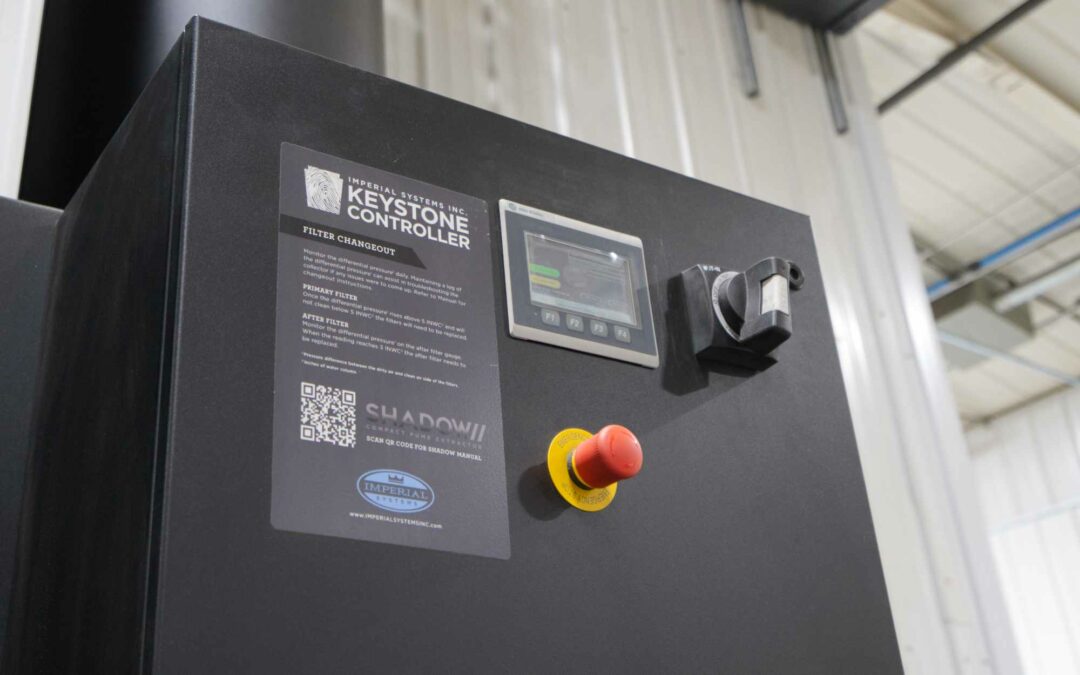
Your dust collector is a crucial investment, and the control panel is one of the key elements that helps it deliver consistent performance. Imperial Systems’ Keystone Controller, standard on our CMAXX and Shadow dust collectors, give you the power to maximize efficiency, minimize downtime, and take full command of your air filtration equipment.
At the heart of every Keystone system is an Allen-Bradley® Micro820 PLC paired with a PanelView® 800 HMI touchscreen. Together, they form the intelligent brain of your dust collection system—delivering precision control, automation, and insight you can rely on.
The VFD Advantage: Smart Efficiency in Action
Upgrading to a Variable Frequency Drive (VFD) transforms how your dust collector performs. Instead of running full-speed all the time, the VFD adjusts the fan speed automatically to match demand—saving energy, extending equipment life, and improving consistency.
Here’s how Keystone’s VFD-enabled controls deliver measurable value:
Consistent Suction, Automatically – As filters load with dust, static pressure rises and airflow can drop. The Keystone Controller monitors this in real time and automatically speeds up the fan to maintain constant suction throughout the filter’s life.
Significant Energy Savings – Running the fan at only the speed required—rather than 100% all the time—can drastically cut power usage. In many cases, the energy savings alone allow the VFD upgrade to pay for itself.
Cleaner Downtime Cleaning – Instead of shutting off completely, the Keystone Controller’s downtime cleaning slows the fan to create a light backpressure. This gentle airflow keeps fine dust from backtracking through ductwork and creating messy dust clouds.
Weekend Mode for Cold Climates – For facilities in freezing conditions, the Keystone Controller offers a low-speed “weekend mode.” It runs the fan just enough to prevent condensation and freezing in ducts—protecting your equipment even while idle.
Smarter Control Comes Standard
Every Keystone panel comes preloaded with intelligent automation that adapts to your workflow.
Flexible Operation Modes
Local Control: Start and stop manually at the touchscreen.
Remote Control: Automatically runs when connected machines power up, and shuts down after the final cleaning cycle.
Scheduled Operation: Set start/stop times by day to match your plant’s production schedule.
Automatic Downtime Cleaning – Whenever the fan stops, Keystone Controller runs a deep-clean pulse cycle—extending filter life and maintaining airflow efficiency.
Password-Protected Settings – A secure maintenance screen allows authorized users to adjust pulse limits, alarm thresholds, cleaning durations, and VFD parameters—keeping untrained personnel from accidentally altering key functions.
Proactive Intelligence to Prevent Downtime
Keystone Controller doesn’t just control your dust collector—it helps prevent costly interruptions.
Predictive Maintenance Alerts – The system counts every pulse valve cycle and notifies you when components approach their expected lifespan, helping you schedule maintenance before failures occur.
Smart Self-Diagnostics – If a sensor or connection fails, the HMI immediately displays a detailed trouble code to guide technicians directly to the issue.
Comprehensive Data Logging – All alarms and key system metrics are automatically recorded for quick reference and trend analysis, including alarm history, differential pressure trending, and data export.
Track Filter Life Accurately – A resettable hour meter records how long each set of filters has been in use, allowing you to predict replacement cycles and budget with precision.
Optional Remote Monitoring – With an Ethernet-based PLC, the Keystone Controller supports VPN-enabled remote access. View live data, monitor system pressures, and even allow Imperial Systems technicians to assist remotely—reducing downtime and service costs.
Future-Ready Design
Your operation evolves, and your controls should evolve with it. The Keystone Controller system is designed for seamless expansion and advanced integration.
Safety Ready – Preprogrammed logic allows simple integration of smoke detection or fire suppression sensors.
Combustible Dust Ready – Built-in logic supports explosion vents and isolation valves on CMAXX collectors, ensuring compliance and safety without complex programming.
Monitoring & IIoT Integration – Keystone supports IO-Link communication, enabling real-time digital data exchange between sensors, actuators, and the control system over standard wiring. This opens the door to advanced diagnostics, smart sensor monitoring, and full IIoT connectivity.
Smarter Control Means Cleaner Air
Imperial Systems’ Keystone Controller transform your dust collector from a simple machine into a truly intelligent clean-air system. With energy-saving automation, predictive maintenance, and future-ready expandability, Keystone helps you get the most from your investment—day after day. Discover the Keystone Controller from Imperial
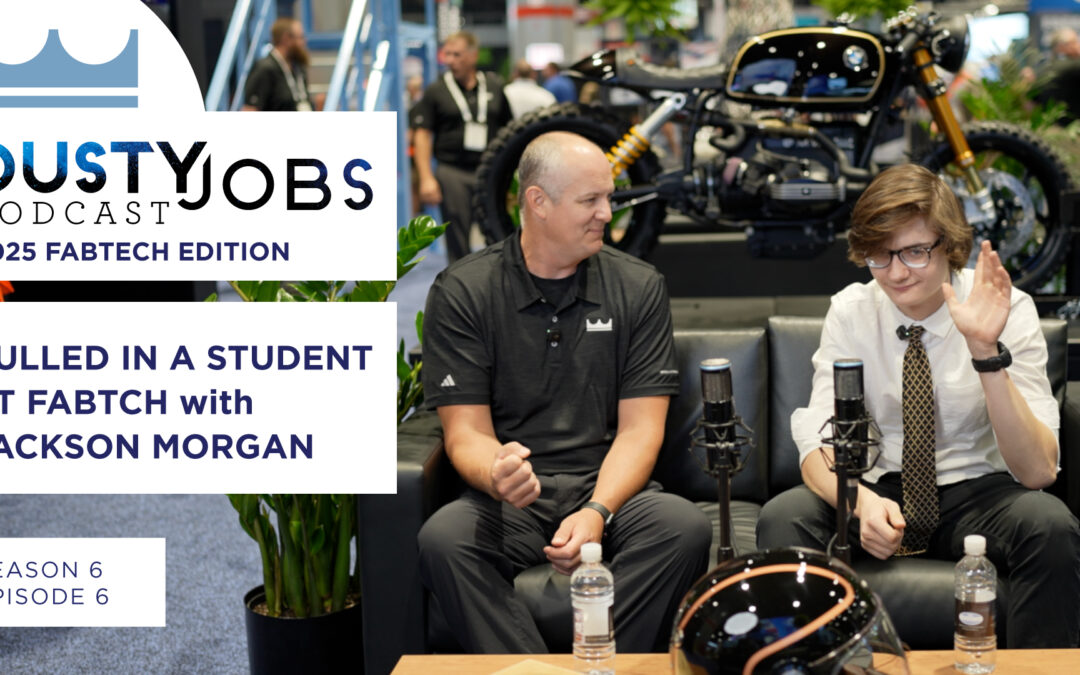
In this episode of the Dusty Jobs Podcast, we sit down with welding student Jackson Morgan from Gateway Community and Technical College in Kentucky at FABTECH 2025. Jackson shares his experience attending the show and his passion for building a career in welding.
Narrator: Welcome to the Dusty Jobs podcast from Imperial Systems. Industry knowledge to make your job easier and safer.
Donovan: Hello and welcome to another episode of the Dusty Jobs podcast. We’re at Fabtech 2025, having a lot of people stop by our booth, and who we have a lot stop by are students. We grabbed one of those guys and had them come in to be on the podcast. We got Jackson Morgan, right?
Jackson: Yep.
Donovan: Jackson Morgan, you’re out of Kentucky.
Jackson: Yep. I’m from Kentucky.
Donovan: You guys came the whole way up from Kentucky to see the show, which is awesome. We love that we have students all over. We had some students that are very close to us in Erie, PA, stop in just a couple minutes ago too. So Jackson, first of all, let me ask you this — what do you think of Fabtech so far? Is this the first time you’ve been to one of these?
Jackson: First time I’ve been to Fabtech. First time up in Chicago. Any big event like this, and it’s a lot, but I love it.
Donovan: So, you’re saying if there’s another student out there somewhere and they have the opportunity to come do this, you’re like, jump on it.
Jackson: Absolutely. If you’re given the opportunity, it’s great experience. You’ll learn a lot. You meet a lot of cool people. And it kind of just gets you really involved in the whole industry. It’s great.
Donovan: So, so far, other than hanging out with me, what’s the highlight of the show for you?
Jackson: So far, I’d say I got to get a hands-on with laser welding, which was really cool. Definitely something I never thought I’d ever do. But it was really neat, and it’s definitely the big future of welding for sure.
Donovan: Yeah, without a doubt. Without a doubt. So right now you are a student at?
Jackson: Gateway. Gateway Community and Technical College.
Donovan: Okay, and you’re learning welding, right? But this isn’t your first go at welding, right? You’ve had a little dabble at welding before.
Jackson: Yeah, so I had a little bit in high school, but this is my first like definitely official, kind of professional environment.
Donovan: Nice, nice. So, we were talking about this a little bit before — what’s your hope? You’re getting into welding. What do you want to do? What’s your end goal here?
Jackson: So, I want to inevitably become an engineer. Draw blueprints, design stuff. I’ve always been a little bit creative and kind of think out of the box, but I want to use my hands-on welding experience and knowledge that I’m getting in school and in jobs that I work, and apply that to drawing those blueprints because I think it’s really important to have that.
Donovan: Yeah, without a doubt. That’s great. And I know for us, a lot of the guys in our own shop have had some chances to come out in the shop and do welding. They’ve all said it’s been a great experience to actually have that hands-on experience, and it helps inform them more of what needs done on the drawing side. So, I think that’s incredible, man. That’s just great.
Jackson: Yeah, yeah.
Donovan: So, do you have a specific realm that you want to start getting into, or are you looking for — like if there’s some potential employers out there, what would you want to get into?
Jackson: I know a lot of my schoolmates, they go Mazak. A lot of them go Mazak. But I’m definitely interested in more structural stuff. I’ve always just liked the big, heavy materials, working with them.
Donovan: Yeah. And you know what? Right now in the industry, we need a lot of people that can do that — that can go and work and get into this larger structural steel. Having hands-on experience building that to then go back and design it, I think that’ll be incredible for you, man.
Jackson: Because I mean, designing when you have the experience — you know what works, you know what the efficient ways of getting things done are, and you can kind of work the drawings around that.
Donovan: So how long are you in school for?
Jackson: So, I had my one year of high school at Gateway. It’s an associate’s, so I got my first year done. I’m in my third semester — two years for that. And then when I transfer to the local college, NKU, Northern Kentucky University, it could be anywhere from two to three years. I’d be coming out with an engineering degree and the welding associate’s.
Donovan: Well, that’s great. Are you planning on welding while you go to school? Are you going to try to work while you’re there? What are you thinking?
Jackson: Whatever kind of comes my way. You know, I might do welding jobs. I might see if I could get like an internship somewhere. Really, I just think it’s good to have a wider view, so kind of just whatever comes at me.
Donovan: Well man, it’s exciting to get to talk to a student and get their impression of Fabtech. How do you like our booth?
Jackson: Oh, it’s really nice. I love motorcycles.
Donovan: Oh yeah, it turned out great. Really clean.
Jackson: Yeah.
Donovan: Well, hey man, thanks for coming on. We really appreciate it, and hopefully maybe in a couple of years you’ll stop back in, and we’ll do this again when you’re an engineer.
Jackson: Yeah, that would be amazing. That’d be great.
Donovan: We’ll be excited to see that. So, everybody out there, thanks for listening, and until next time, stay healthy and stay safe.
Narrator: Thanks for listening to the Dusty Jobs Podcast. Breathe better, work safer.
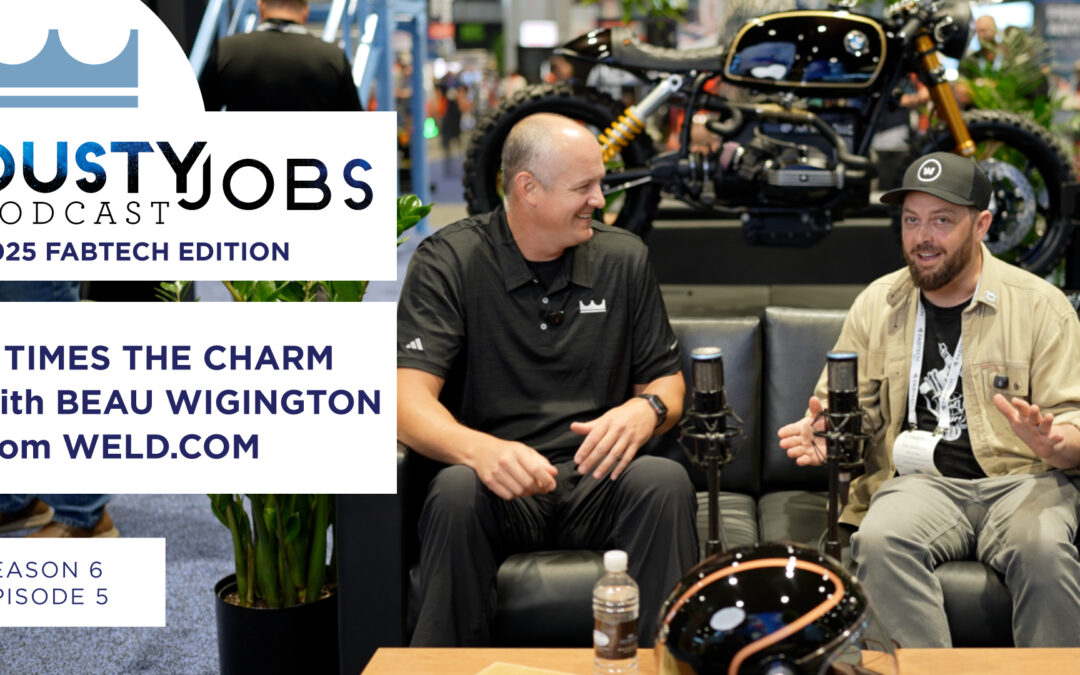
In this episode of the Dusty Jobs Podcast from FABTECH 2025, we talk with Beau Wigington from WELD.com. Beau shares how WELD.com is making welding easier to learn with simple, accessible content and dives into their plans for machine comparisons, video podcasts, and more. We also discuss how automation and clean air solutions are changing the future of welding and making it safer for the next generation.
Narrator: Welcome to the Dusty Jobs podcast from Imperial Systems. Industry knowledge to make your job easier and safer.
Donovan: Hello, welcome to another episode of the Dusty Jobs podcast. Fabtech 2025.
Beau: 2025.
Donovan: And guess who I found at Fabtech 2025? Beau from WELD.com. Surprise, surprise.
Beau: Surprise, surprise. I didn’t know I was going to be here.
Donovan: Every year it’s a surprise.
Beau: Well, you guys were across the street from us that first year.
Donovan: That’s true.
Beau: Because that was like my break into, like, podcasting, because I came down here on a whim. Well, it was Atlanta.
Donovan: Yeah.
Beau: And I interviewed, like, 27 people. You guys were just like, “You’re working hard over there. You want to come on our podcast?”
Donovan: That’s right.
Beau: I was like, that’d be a good change of pace, I think.
Donovan: So that year you guys had that really cool table that you guys had set up. Now you guys are here doing it again this year.
Beau: We’re here doing it again.
Donovan: And you guys are partnering with…
Beau: So, we are here. We have a booth with the American Welding Program—
Donovan: Yep.
Beau: —who is our education partner. So, we show a lot of, like, the kind of textbook stuff that they do. We translate it into video and try to make it digestible for normal people. Maybe if you’re not a welder and you don’t understand fancy terms, we try to make it simple.
Donovan: People who are just getting started, just trying to figure out what they’re doing. Maybe they bought their first welder from Harbor Freight.
Beau: Yes, that is actually a big thing we’re going to try to focus on next year, is, like, all of those machines. There’s a lot of really cheap machines out there, but how good are they? You know, how long will they last? What kind of welding can you actually do with them? Those are the kind of questions we want to answer with the channel over the next year.
Donovan: Well, that’s cool. So that’s some new stuff you got coming up over the next year. Product review, it sounds like. Is that…
Beau: It’s going to be more like a… have you ever watched, like, a guitar pedal shootouts or amps? Like, they’ll have… They’ll put them side by side.
Donovan: Oh, yeah.
Beau: And just, just put them up to each other and see what happens. And then maybe blow them up, you know? I, I want to see how far we can push some machines and see if we can get some to blow up.
Donovan: That’s awesome.
Beau: We got really into blowing things up this year.
Donovan: Well, and you guys, you guys did a lot of traveling this year, too, right? You guys kind of took it on the road.
Beau: I think this is my 13th trip of the year.
Donovan: Oh, man. Put some miles on.
Beau: Yeah. Lots of miles.
Donovan: So, up to… for maybe some people that haven’t been following you, which they should. They should go out there.
Beau: Come on. I’ve been on this podcast every year! Got to be following by now.
Donovan: Well, we encourage everybody from our group to go see your group. So, hit us with some of the highlights, where you guys ended up this year.
Beau: Okay, so some of the highlights: we did Florida. Florida’s always fun. We got to go out to Utah, and we saw a, like, a gigantic, like, beam manufacturer called BZI.
Donovan: Okay.
Beau: They make a bunch of structural steel. So, we got to see how that’s done. And then they trained us on some seismic welding, and we got to do some fly fishing on our day off.
Donovan: Nice.
Beau: Been to multiple welding competitions. Went to the Yeti welding competition out in Utah.
Donovan: Okay.
Beau: SkillsUSA, the national competition. Got to go to that.
Donovan: Oh, that’s great.
Beau: I hosted Clash of the Grinders here. I did 3 hours of commentating straight.
Donovan: That’s great.
Beau: It was a lot, but it was fun. And then we, we’re going to be going up to New York again. We do this event called Maker Camp where we teach makers, which is like a hardcore DIY person.
Donovan: Yeah.
Beau: People that are like, “I want to learn a bunch of different skills.” We go up and teach them welding. This year we’re going to be doing a welding competition up there. I guess we’re just in the competition mode this year.
Donovan: There you go. Now, there was, there’s a scrap festival? Do you guys go to that, too?
Beau: So, I went to that two years ago, but actually tomorrow I’m doing a panel with some of the artists at our booth.
Donovan: There you go.
Beau: But, yeah, I’m hoping we’re going to go next year. I really want to build something for ScrapFest.
Donovan: Nice. You?
Beau: Yeah.
Donovan: Yeah, you should do it!
Beau: Yeah. Have you heard of the event before?
Donovan: Yes, I’ve heard of it before, and I, I’ve seen your guys’ other episodes on it.
Beau: Yeah. No, it’s, it’s very cool. Like, it’s close to here, so hopefully some Chicago people, if you’re watching, you can go and be part of it.
Donovan: Yeah, anybody local should go to it. Even, even travel. It looks like it’s a great time. Looks like a lot of fun. A lot of cool stuff gets made.
Beau: So, like, the city of East Lansing, as it grew throughout the years, it grew around a scrapyard, right? Like a metal recycling yard. So, every year that, that plant, they give all these artists 500 lb of free metal to go make a sculpture. They have one month to do it, and then they have to bring it back up, and then they close down the entire, like, downtown street and put the sculptures all the way down the street and have a big street festival. It’s amazing.
Donovan: Yeah, it, it just, it looks cool. If you’re in the area, or just willing to, you got a couple extra vacation days to burn, you should go check it out.
Beau: Burn them up. Burn them up.
Donovan: So, you guys talked about, you’re going to be doing some upcoming, kind of product review. We talked about that. Anything else new coming out on WELD.com this year that…
Beau: We’re switching to video podcasts.
Donovan: Okay.
Beau: Like, we’ve been mainly audio podcasts.
Donovan: Yeah.
Beau: But we’ve been traveling. So, I never really like doing the video podcasts over the Internet because it just felt like recording a Zoom call. I don’t think it’s that cool, you know? But I’ve been traveling to people’s shops or different businesses, and, like, I did a, I did a podcast in the middle of a $6,000 laser cell, like, with it just spinning on a five axis earlier this year. Like, just trying to show people the cool stuff, but then talk about it in the middle of it, you know, because I feel like that’s the hardest part with the industry and all. Like, it’s hard getting the younger generations to see the cool things.
Donovan: Yep.
Beau: Like, you can tell, but you have to show, right? And so that’s a big part of, like, our podcast. We’re trying to show really cool things you can do and then teach you how to do it on the channel, you know?
Donovan: Right. Yeah. Because, I mean, I think we’re still at a shortage.
Beau: Yes.
Donovan: That’s it. As a nation, we’re still at a shortage of people who are welding. I mean, if you stay, if you come around the show, there are a ton of people here in the metal working industry, but we still need more.
Beau: Yeah.
Donovan: And if someone’s at home listening to this, or someone’s at home thinking about it, or maybe they’re thinking about “What could my children be successful at in America?” Welding is an area you can still do a lot and have a good living at it.
Beau: And it’s fun. A lot of people are afraid of welding because of, like, the reputation it has. You know, people think it’s dangerous, dirty, and, like, you’re going to just be in the nastiest conditions ever, right? A lot of that’s changed with technology, you know, and, like, a lot of welders don’t like the word automation, but automation is making our trade a lot safer. So, you know, the parents out there that might be kind of scared of their kid getting into the welding industry, sometimes they’ll be doing it with a robot. You know, they’ll have a robot that’s doing that, like, nasty, if they’re welding something super corrosive that’s throwing off, like, hexavalent chromium, you know, it’s like you, you don’t want to be breathing it in. So have a robot do it, right?
Donovan: And then we can take that air here in Imperial Systems and clean it so that you’re still not even standing in an environment that that robot’s producing that weld fume.
Beau: Yeah, that’s very important part of the equation.
Donovan: Yeah.
Beau: Because that’s something, like, I talk to a lot of people overseas. So, in Europe, the standards over there for welders, you have to wear a PAPR, and it’s, like, very hardcore on safety, and they call us cowboys over here because the one kind of welding mask, if you’ve ever seen a pancake hood, right, like, it’s just, like, a big, big circle, and they, they can’t wrap their heads around what those are all about. They’re just like, “What is this even about?” But the reason people wear pancake hoods is you can talk to your helper, you know, and they can understand you.
Donovan: Yeah.
Beau: But it’s not really that great for breathing in those.
Donovan: Yeah. Yeah. So, here that’s what we’re trying to do is help people to go home healthier and safer to their families every day. And you guys are doing the same thing over there, trying to educate people on what the, the benefits and the, the ways to, weld, but also you guys are helping people learn how to stay safe, too.
Beau: Oh, yeah. Safety is a big part of our business. Like, we are making it our business to keep people safe.
Donovan: Yeah.
Beau: More people out there doing it, better everybody’s going to be out.
Donovan: Yeah. Yeah. It’s just going to be better for our economy, better for our industry, better for our country
Beau: And people can work in the industry longer.
Donovan: Yeah.
Beau: If they’re not having to retire for medical reasons, you know.
Donovan: Exactly. Yeah. Well, once again, it’s always great talking to you.
Beau: Four times in a row.
Donovan: We’ll see. We’ll see what next year brings.
Beau: We’ll see.
Donovan: Maybe we’ll have to come your way. We’ll come be on your podcast next year, maybe.
Beau: I’ll just come and bring it here.
Donovan: That’s true.
Beau: That’s my thing. I bring it to you.
Donovan: That’s, yes. Very fair. Very fair. My booth is not quite as full as this booth. You guys go out every year.
Donovan: Yeah. Our team here does a great job. I’m sure whatever we have next year will be phenomenal, too. They come up with a great idea every year.
Beau: The best carpet in the gang, people. The best carpet in the game.
Donovan: When you got to stand on it for four days, it’s nice to have.
Beau: I know. That’s why I love coming here. It’s like my, like, rest time. I can lay down and take a nap if I want to.
Donovan: Yeah. If somebody’s having a hard time at the show, come on. We can get you, get you a nap.
Beau: Yeah. Get you a good nap.
Donovan: But, all right. Well, once again, appreciate you coming by, of course, having a good time with us. And, you know, go over to WELD.com, follow you guys on Instagram, Facebook, you guys are on everything, right?
Beau: Yeah. Anywhere you want to be, we’re probably there.
Donovan: There you go. Same with Imperial. Look us up on our social media. We appreciate it, and like and subscribe. I think that’s what I’m supposed to say on these.
Beau: Like, subscribe, and hit that bell if you want to get those notifications.
Donovan: There you go. So, but until next time, stay healthy and stay safe. Um, thanks.
Beau: Thank you.
Narrator: Thanks for listening to the Dusty Jobs podcast. Breathe better, work safer.
 What is an integrated spark arrestor?