Metalworking facilities generate significant amounts of dust, smoke, fumes, and other airborne particles during everyday operations. Processes such as welding, laser and plasma cutting, grinding, and finishing all release contaminants that can affect worker health, damage equipment, and create regulatory compliance risks. Selecting the right industrial dust collection system for a mid-sized metalworking facility is essential for maintaining a safe, efficient, and compliant operation.
Understand Your Metalworking Processes
While every facility is different, there are several key factors metalworking operators should evaluate before investing in a dust collection system. The first step in selecting a dust collector is identifying the specific processes generating dust or fumes.
Common sources of airborne contaminants in metalworking shops include:
- Welding smoke/fumes containing fine metal particles
- Laser and plasma cutting smoke with ultra-fine particulates
- Grinding and finishing dust generated from abrasive materials
- Shot blasting debris from surface preparation
Each of these processes produces particles with different sizes, temperatures, and characteristics. For example, welding fumes are extremely fine and spread easily with air currents and require high-efficiency filtration, while grinding operations typically produce larger heavier particulate that need to be captured in a different way, but may not require as high efficiency in the filters.
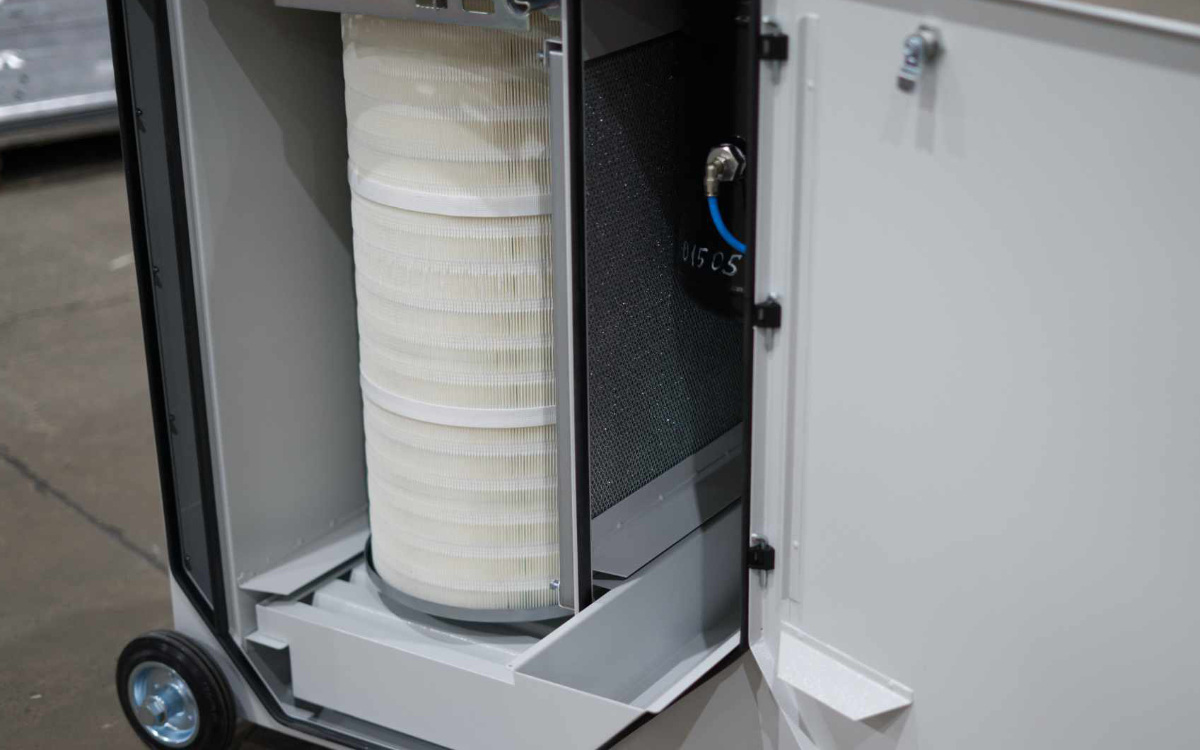
In most metalworking environments, cartridge-style dust collectors are the preferred solution because they provide excellent filtration efficiency and strong airflow in a compact footprint.
Determine Airflow Requirements (CFM)
One of the most important specifications when evaluating industrial dust collection systems for metalworking facilities is airflow, typically measured in cubic feet per minute (CFM).
The required CFM depends on several factors:
- Number of dust-producing machines
- Size and design of the ductwork that will run to the dust collector
- Type of collection points (hoods, downdraft tables, extraction arms)
- Particle characteristics
Mid-sized facilities often require systems ranging from a few thousand CFM for localized extraction to well over 100,000 CFM for centralized systems serving multiple production lines.
 Considering Source Capture vs Ambient Collection
Another key decision is how dust, smoke, and fumes will be captured. This should take into account the processes that are producing dust, the capture velocity required, and the size of the spaces they are in.
Source capture systems remove contaminants directly at the point where they are generated. This includes welding fume extraction arms, plasma cutting table hoods, and grinding station downdraft tables.
This approach is often considered the most effective because it prevents contaminants from spreading through the facility. Often the manufacturing process makes source capture difficult, or impossible to do so alternatives might need to be considered.
Some facilities also benefit from ambient air filtration systems, which continuously circulate and filter the air throughout the shop. Ambient systems may be the best option for facilities making large pieces where the work zone is continuously moving.
Evaluate Filtration Efficiency
Metalworking dust can be extremely fine, especially when generated by cutting or welding processes. High-efficiency filtration is essential to ensure these particles are properly captured.
Cartridge dust collectors are widely used in metalworking because they offer a combination of features not available in baghouse units. These include:
- Large filtration surface area
- High filtration efficiency
- Compact equipment footprint
- Easy filter replacement and maintenance
Advanced cartridge filters can capture particles well below 10 microns, which is critical for controlling welding fumes and other fine particulates.
Review Safety and Compliance Requirements
Dust collection systems also play an important role in regulatory compliance and facility safety. These regulatory agencies may include OSHA, EPA, and the NFPA. The National Fire Protection Association (NFPA) for example publishes standards related to combustible dust hazards. While many dusts may not be flammable or combustible, certain materials such as aluminum or magnesium can present explosion risks if not handled properly.
When evaluating a system, facilities should consider:
- Spark mitigation strategies
- Explosion venting or suppression systems (when applicable)
- Proper duct design and grounding
- Safe dust disposal methods
Consulting experts familiar with applicable NFPA guidelines can help ensure that systems are designed with safety in mind.
Plan for Maintenance and Long-Term Performance
Industrial dust collectors are long-term investments. Beyond initial system performance, facilities should also evaluate maintenance requirements.
Key considerations include:
- Filter change intervals
- Accessibility for maintenance
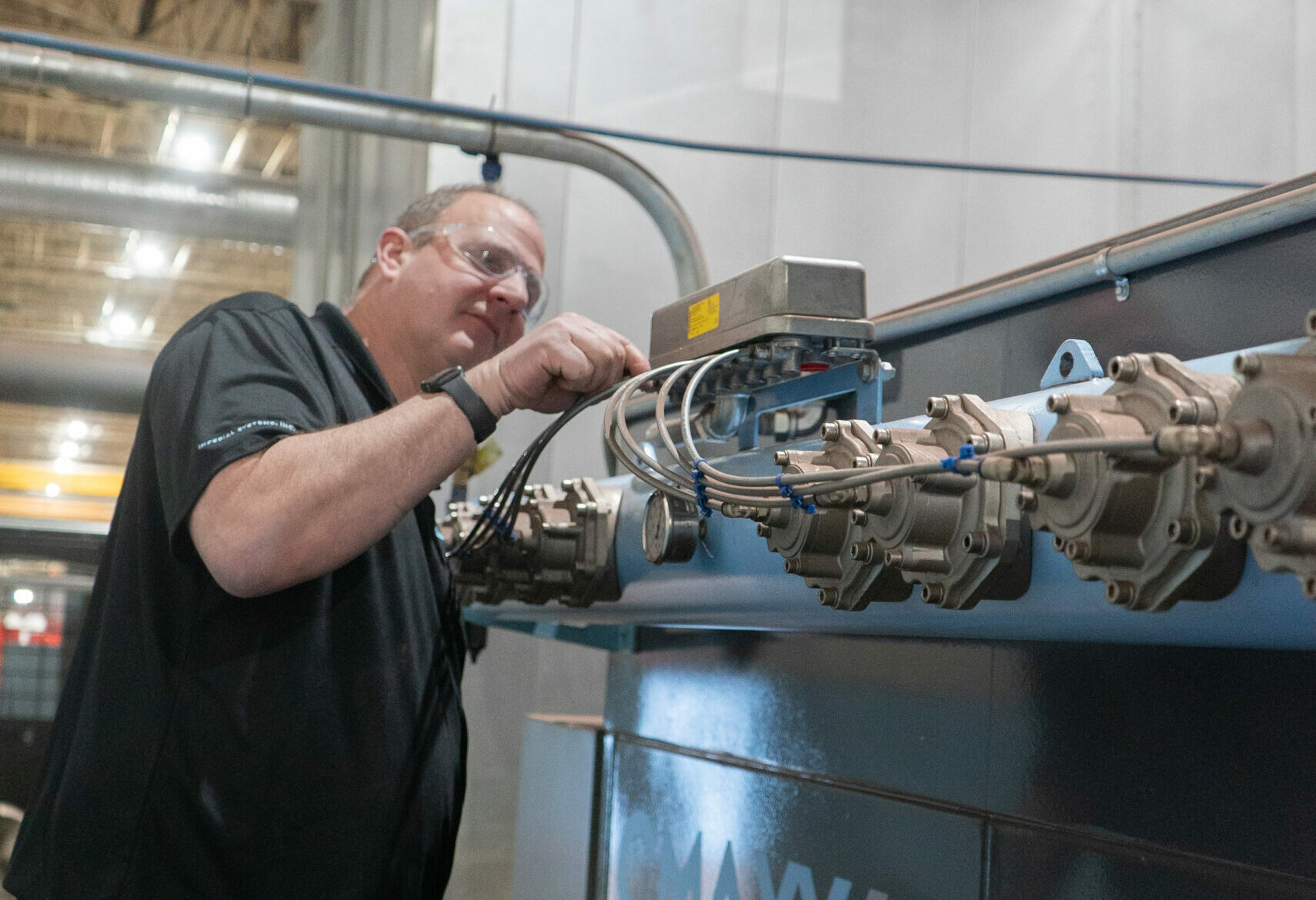
- Cleaning mechanisms (such as reverse pulse jet cleaning)
- Replacement part availability
A well-designed cartridge dust collector should provide consistent airflow while minimizing downtime and maintenance costs.
Work With Dust Collection Experts
Selecting the right industrial dust collection system for a mid-sized metalworking facility requires careful evaluation of processes, airflow requirements, safety considerations, and future expansion plans.
While general guidelines can help narrow down options, every facility has unique challenges that require customized system design.
Dust collection manufacturers with experience in metalworking applications can recommend solutions ranging from compact fume extractors for individual workstations to large centralized collectors capable of handling more than 200,000 CFM of airflow.
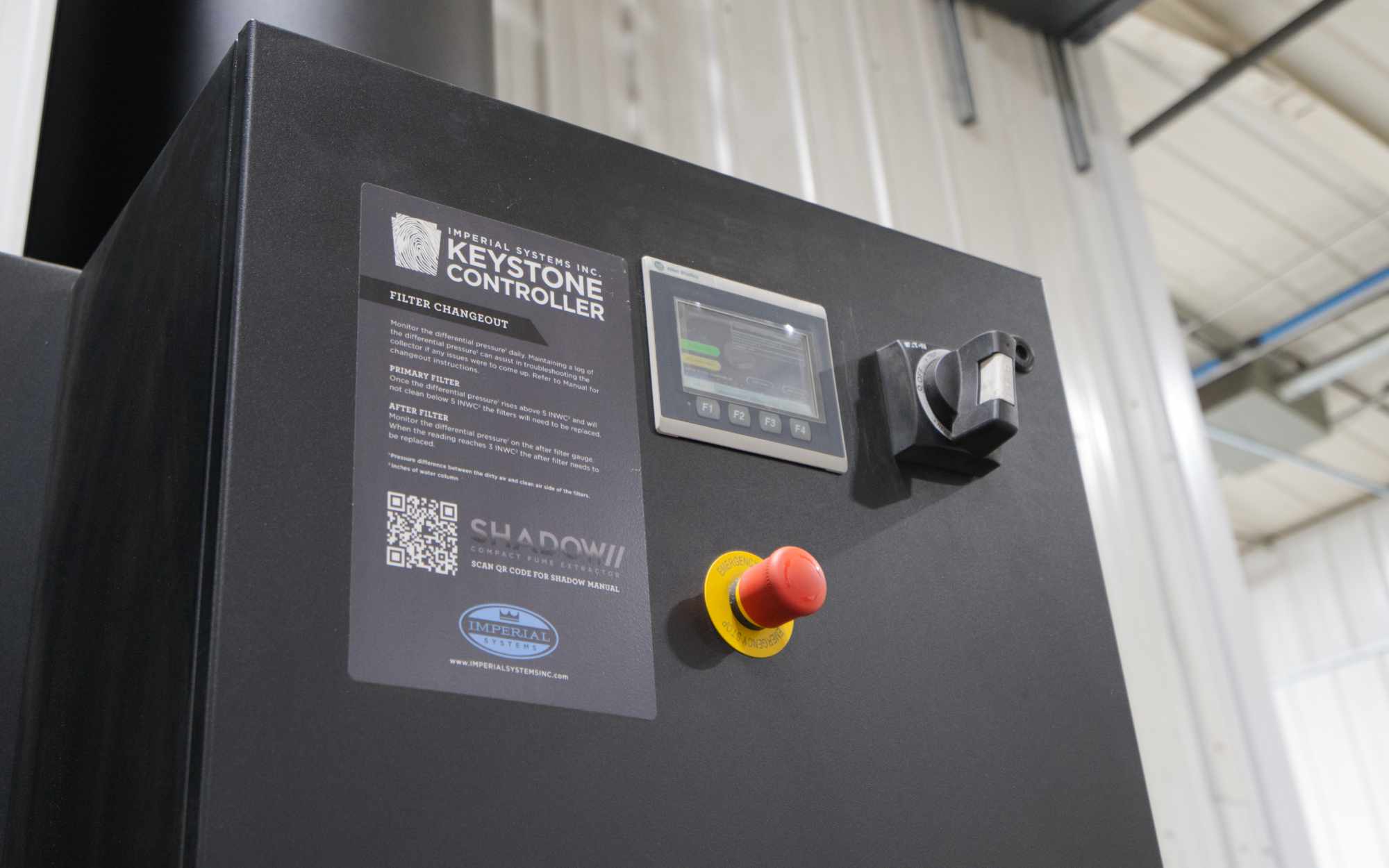
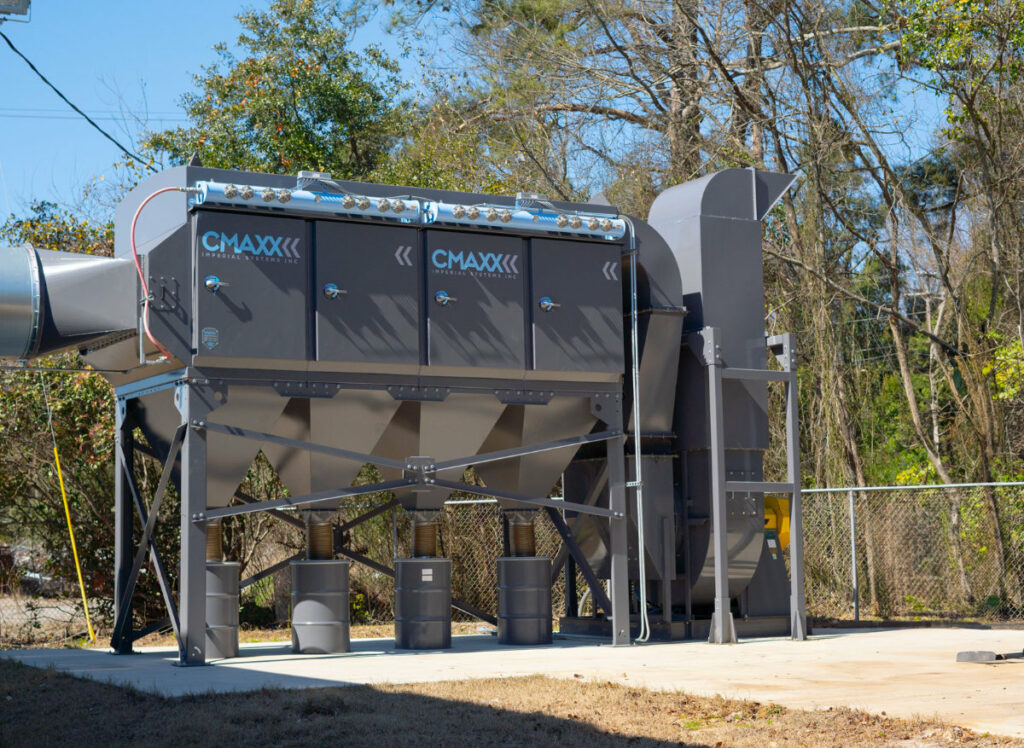
For example, many metalworking facilities rely on cartridge-style systems to control airborne dust and fumes efficiently. Imperial Systems has designed a range of collectors to control airborne dust and fumes. The CMAXX Dust & Fume Collector and Shadow Compact Fume Extractor are commonly used in metalworking applications, as well as the Shadow Ambient Dust Collector in applications that allow for ambient filtration solutions.
If you’re planning a new installation or upgrading an existing system, working with experienced professionals can ensure the equipment is properly sized, configured, and compliant with applicable standards.
Contact our dust collection experts today to discuss your facility and receive recommendations for the right system for your application.