Plasma Cutting Fume Extraction
Plasma cutting is a widely used industrial process that involves using a high-temperature, ionized gas to cut through metal. Although it is a highly effective method for fast and precise cutting, it also produces hazardous fumes and smoke that can pose significant health risks to workers if proper precautions are not taken. Therefore, it is essential to have appropriate ventilation systems installed in areas where plasma cutting occurs to minimize the exposure of employees to harmful fumes.
DIFFERENT TYPES OF PLASMA CUTTERS
There are several types of plasma cutters available on the market. The choice of the best plasma cutter for a given application depends on the type of material, the thickness of the material, and the precision of the cut required.
- Conventional plasma cutters: These are the most common type of plasma cutters and use compressed air as the plasma gas. They can cut through a variety of materials, including stainless steel, aluminum, and mild steel.
- High-definition plasma cutters: These cutters produce a narrower kerf and smoother edge than conventional plasma cutters. Their precision makes them suitable for intricate or exact shapes and designs.
- CNC plasma cutters: Controlled by computer numerical control (CNC) software, these cutters allow for precise and automated cutting of complex shapes and designs.
- Handheld plasma cutters: These cutters are portable and can be carried to different job sites and work stations. They are ideal for smaller tasks.
- Dual gas plasma cutters: A mixture of gases, such as nitrogen and hydrogen, is used to cut through thick materials that are difficult to cut with conventional plasma cutters.

Here’s how a plasma cutter works. First of all, a gas is heated until it reaches the fourth state of matter, plasma. Secondly, molecules in this plasma state are electrically charged to conduct electricity. After that, an electric arc contacts the gas to produce a plasma jet. Meanwhile, forcing the gas through a nozzle forms the plasma jet, putting it under high pressure. The temperature of the plasma can reach 40,000 degrees Fahrenheit or even hotter.
The cutting temperature is much higher than the melting point of the metal being cut. Due to this, the plasma jet blasts through the metal. As a result, this turns the metal into very fine smoke or fume. Plasma cutter fume extraction is essential to protect workers from the dangers posed by these fumes.
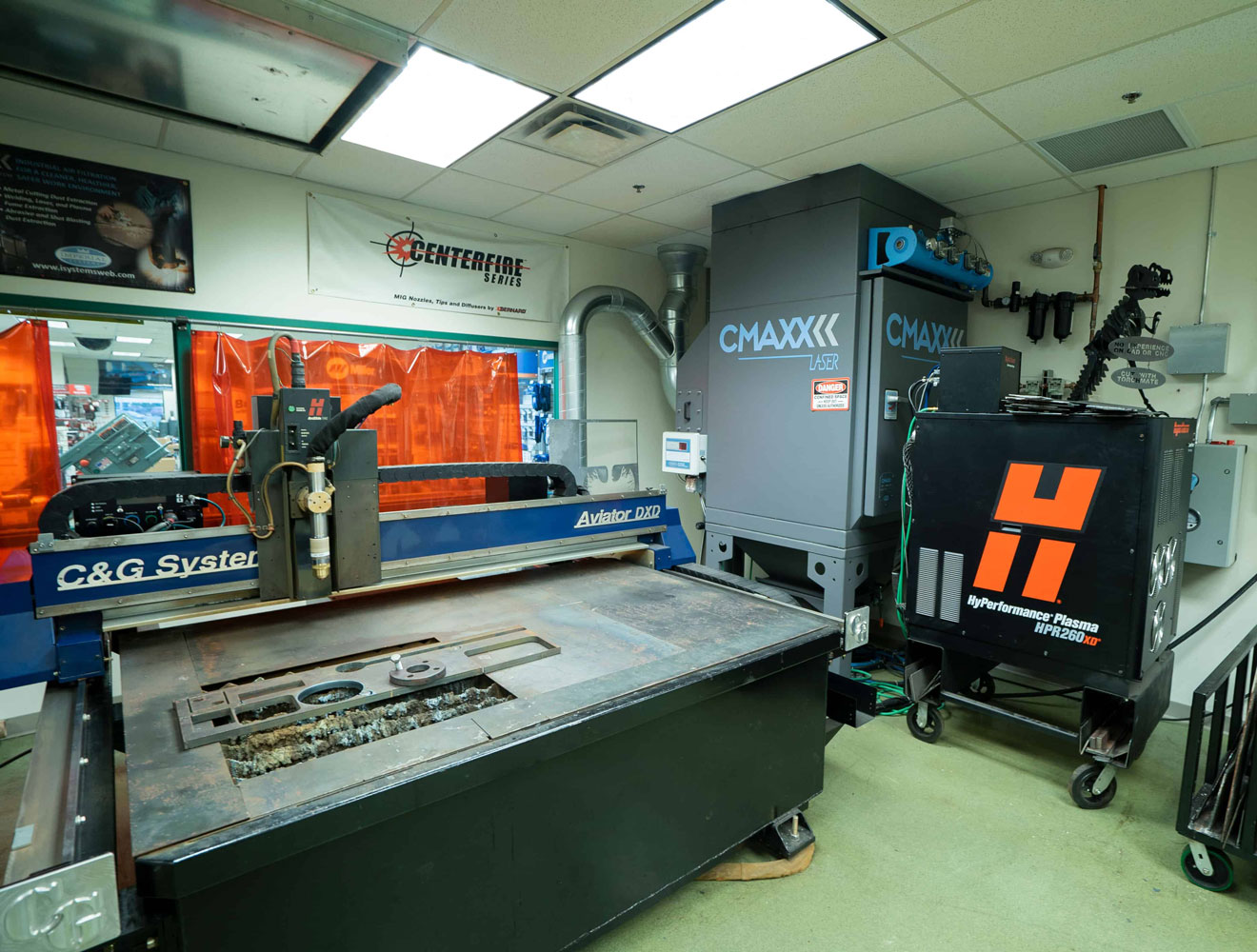
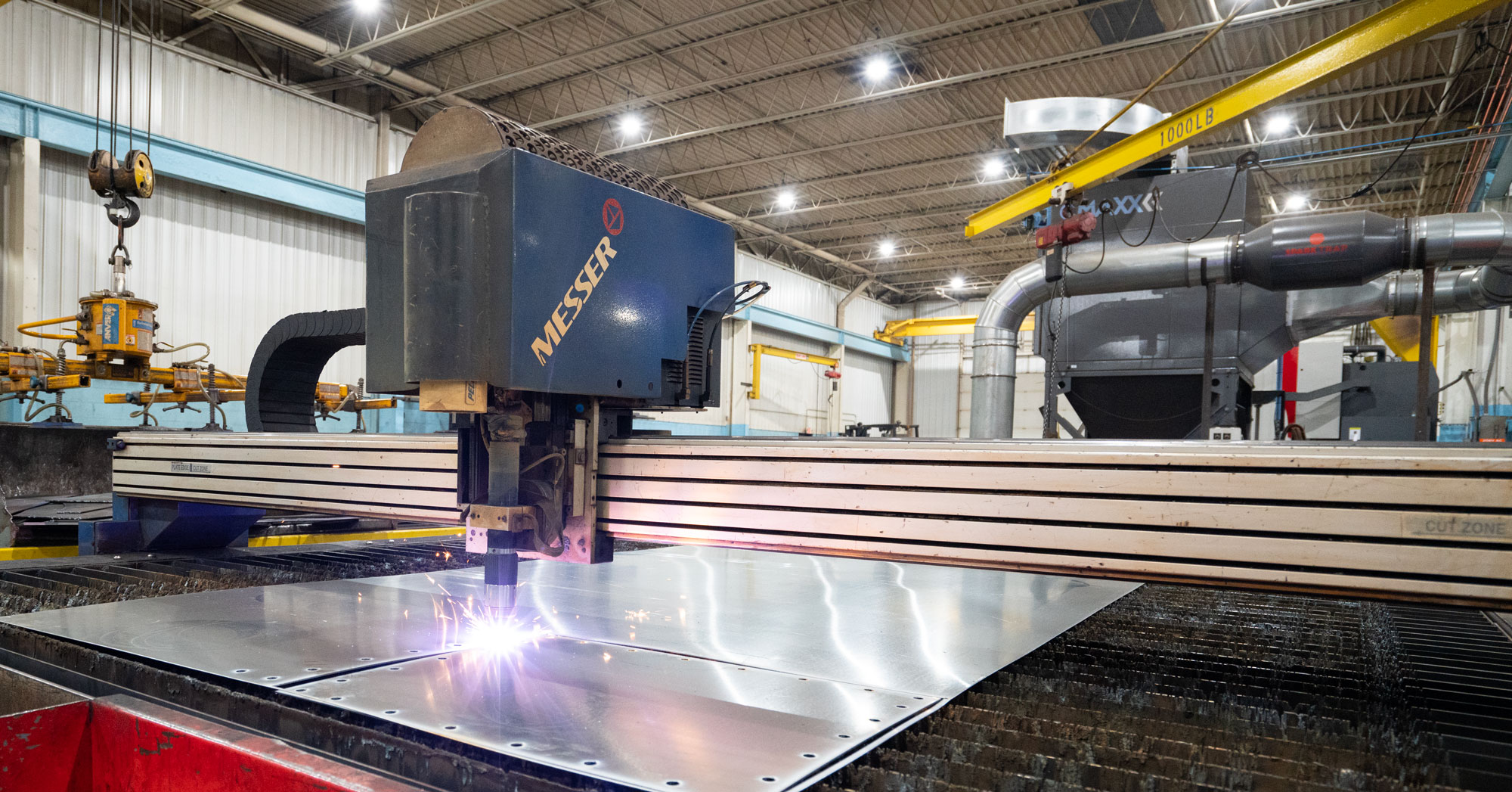
A plasma cutting table uses a downward air flow. This pulls smoke and fumes from the cutting process. After that, the air passes through a dust collection system that filters out the contaminants. Finally, the air usually returns inside the building. This is because heated or cooled air would otherwise be lost in the process. There’s another consideration if the facility is cutting stainless steel. In this case, the dust collection system may need to have special filters to manage hexavalent chromium emissions.
How Does Plasma Cutting Produce Hazardous Fume?
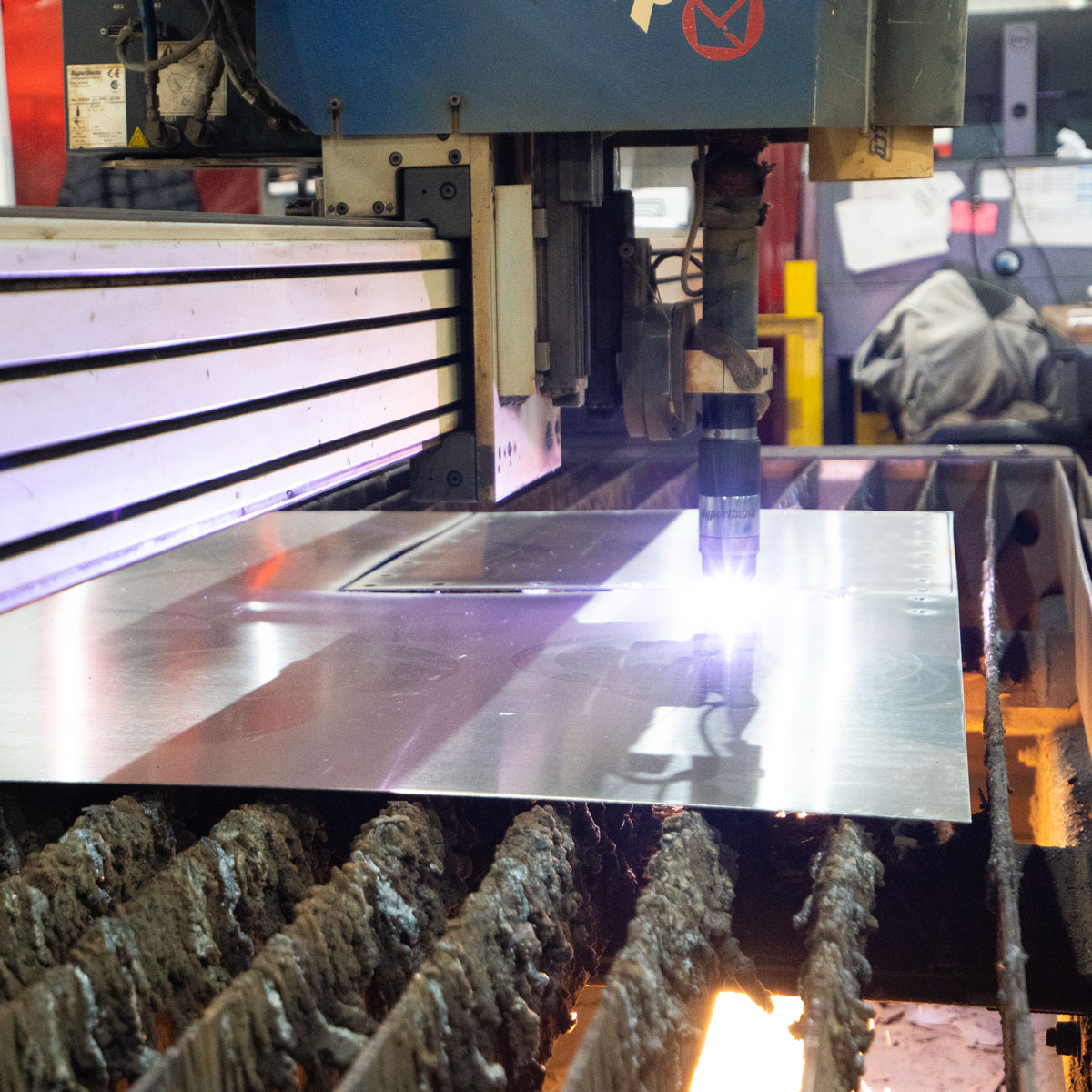
All types of plasma cutting produce hazardous fumes to some extent. When the plasma arc cuts through metal, it vaporizes and ionizes the metal, creating a plasma plume that contains metal particulate and other harmful substances. The exact composition of the fumes can vary depending on the type of metal being cut and the type of plasma cutter being used. For example, cutting stainless steel can produce hexavalent chromium, which is a carcinogen, and cutting aluminum can produce aluminum oxide, which can cause respiratory irritation.
WHY ARE PLASMA CUTTING FUMES DANGEROUS?
Because plasma cutting can produce a different fume depending on a variety of factors, it can also affect employee health in many different ways.
- Metal particles: The plasma cutting process vaporizes and ionizes the metal being cut, creating metal particles that can be inhaled by workers. These particles can cause respiratory irritation, lung damage, and other health problems.
- Carbon monoxide: Plasma cutting can produce carbon monoxide, a colorless, odorless gas that can be deadly at high concentrations.
- Hexavalent Chromium: Cutting materials containing chromium, such as stainless steel, can produce hexavalent chromium, a carcinogenic substance that can cause lung cancer and other health problems.
Chemical Isolation Systems
A rapid discharge of a chemical explosion suppressant prevents the flame from continuing to other ares of your dust collection system. This is best used when explosion venting is not an option.
Spark Trap
A Spark Trap creates a tortuous path that slows sparks and embers down and causes them to loose heat. This prevents sparks from entering the dust collector and creating a fire. Spark Traps are recommended by NFPA as part of a complete fire prevention system.
Rhino Drum
The Rhino Drum Explosion Tested Drum Kit is a cost efficient alternative to a rotary airlock, and can withstand an explosion up to 7 psi. With a tool free design and no moving parts, the Rhino Drum can be quickly emptied for easier maintenance.
Abort Gate
An Abort Gate is typically situated on the return air side of the dust collector and diverts clean air, sparks, and fumes. An Abort Gate can also be trigged by a spark detector or broken bag detector, preventing harmful material like fire and smoke from entering the building.
Explosion Venting
Explosion venting allows a flame front and pressure wave to escape from within a collector and dissipate into the atmosphere. Explosion vents include a burst indicator that alert in the event of a deflagration.
Explosion Isolation Valve
This system is installed on the ductwork and detects any sparks that are present in the duct. Once detected, sparks are extinguished downstream before they can continue on and cause further damage to equipment or reenter the facility.
Airlock
Our Airlocks maintain a consistent seal at the outlet of the dust collector while allowing material to continuously pass through. This seal also allows discarded material to be properly discharged, and prevents it from returning to the dust collector.
Blog Posts
Case Studies
White Papers on Plasma Cutting Fume
Plasma Cutting Fume Extraction
Frequently Asked Questions
What is plasma cutting fume extraction?
Plasma cutting fume extraction is the process of capturing and filtering the smoke and metal particulate produced when a plasma arc cuts metal. Most systems pull contaminated air through a downdraft cutting table, filter it through a dust collector, and either recirculate clean air or exhaust it outside.
Are plasma cutting fumes dangerous?
Yes. Plasma cutting fumes contain fine metal particles, carbon monoxide, ozone, and nitrogen oxides that can cause respiratory irritation, metal fume fever, chronic bronchitis, and lung damage. Cutting stainless steel produces hexavalent chromium, a known carcinogen, and cutting galvanized steel produces zinc oxide fumes.
Does OSHA require fume extraction for plasma cutting?
OSHA sets Permissible Exposure Limits (PELs) for substances released during plasma cutting, including hexavalent chromium, manganese, and zinc oxide. Employers are legally required to stay below those limits, which typically means installing engineering controls like a downdraft table paired with a cartridge dust collector with high-efficiency filters. Relying on PPE alone is not considered compliant.
What is a downdraft table and how does it work?
A downdraft table is a cutting surface with a grated top and ductwork or zoned chambers built underneath. In this case, as the plasma torch cuts, a powerful fan pulls fumes downward through the grate and into a dust collector. Because most plasma fumes are emitted below the plate being cut, downdraft extraction is the most effective capture method for mechanized cutting.
What CFM do I need for plasma cutting fume extraction?
It depends on table size, cutting amperage, and materials. A general guideline is a capture velocity of at least 150 feet per minute (0.75 meters per second) at the point of fume generation. Zoned downdraft tables reduce total CFM requirements by only pulling air from the chamber nearest the torch, while larger open gantry tables may require several thousand CFM. A professional assessment is the best way to size your system. Other factors that may affect air requirements include the thickness and type of steel being cut, the percentage of the table covered during cutting, and the type of cut.
Does cutting stainless steel require special fume extraction?
Yes. Stainless steel produces hexavalent chromium, one of the most hazardous substances in metal fabrication. Systems cutting stainless steel should use high-efficiency filters such as the MERV 15-rated DeltaMAXX Prime. If you want to recirculate the filtered air back into the facility, you may be required to add HEPA secondary filters as a final layer of protection.
Can plasma cutting fumes be recirculated indoors?
Sometimes. Recirculation is allowed when the filter removes contaminants below OSHA PELs, and it saves energy by preserving heated or cooled air. However, recirculation is generally not appropriate when cutting stainless steel, coated metals, or materials that generate hexavalent chromium.
What's the difference between a downdraft table and a water table?
A downdraft table uses airflow to pull fumes through a grate into a dust collector, while a water table submerges the underside of the workpiece to trap particulate in water. Water tables have a lower up-front cost but can cause rust, require constant water level adjustments, create steam and humidity that can damage CNC electronics, produce contaminated sludge, and can pose hydrogen gas explosion hazards when cutting aluminum. Most high-production shops choose downdraft tables paired with a cartridge collector like the CMAXX for better long-term value.
What kind of dust collector works best for plasma cutting?
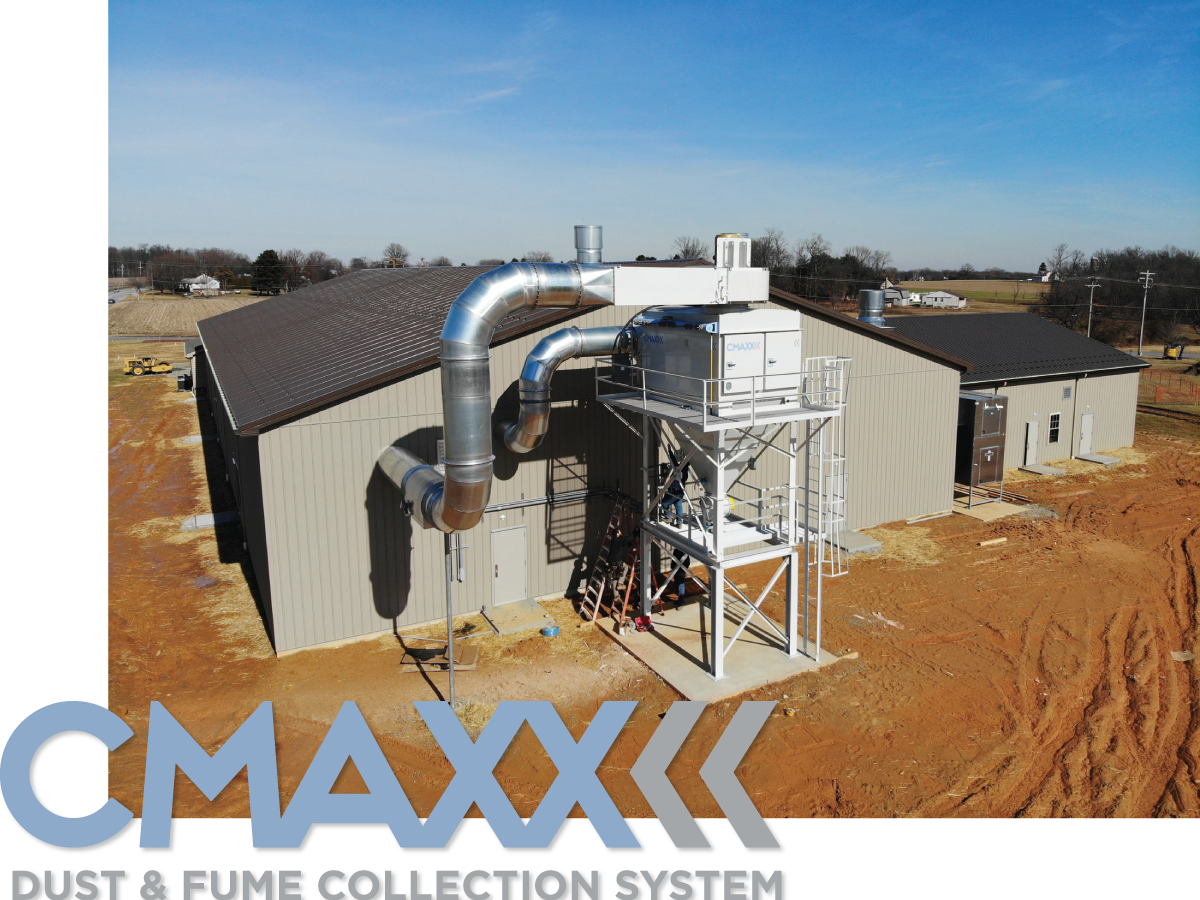
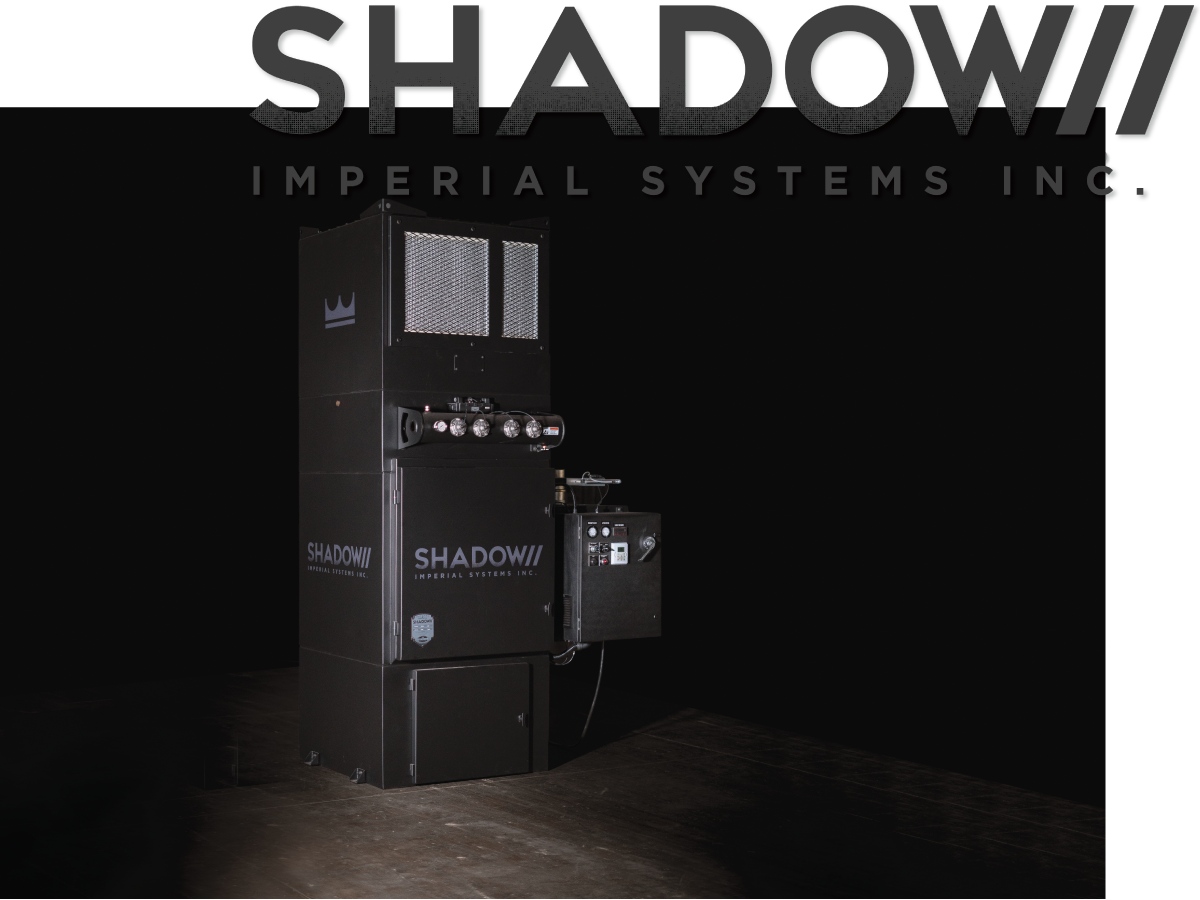
Cartridge-style dust collectors with high-efficiency nanofiber media are the standard for plasma cutting. Imperial Systems’ Shadow and CMAXX Dust & Fume Collector use MERV 15 rated DeltaMAXX Prime filters designed to capture submicron particulate generated from Plasma cutting. Cartridge systems are more compact, energy efficient, and easier to maintain than baghouse sock-style filters.
Is plasma cutting fume combustible?
Yes, under certain conditions. The fine metallic dust collected from plasma cutting, especially from aluminum, magnesium, or coated materials, can be combustible inside a dust collector. NFPA 660 requires a dust hazard analysis or DHA to determine if a dust is explosive and what mitigation steps you must take. Some items that may be required for fire and explosion protection include a spark trap, spark detection and extinguish, explosion venting, and isolation.
Do I need a spark trap on my plasma cutting dust collector?
A spark trap is strongly recommended. Plasma cutting produces frequent hot sparks that can travel through ductwork and ignite accumulated dust inside a dust collector. Imperial Systems’ Spark Trap is recommended by NFPA as a passive protection device with no moving parts, making it low maintenance and highly effective. Facilities cutting aluminum or coated materials typically need additional explosion protection as well.
How often do filters in a dust collector connected to a plasma cutting table need to be changed?
Filter life depends on cutting volume, material type, and whether the dust collector has pulse jet cleaning technology. Quality cartridge filters like DeltaMAXX Prime can last 6 to 12 months in heavy production, while lower volume operations often see multiple years of filter life. Rising differential pressure across the filter is the clearest indicator that a change is needed. Consult your dust collector manufacturer for guidance on when the filters need to be replaced.
Does handheld plasma cutting need fume extraction?
Yes. Handheld plasma cutting exposes the operator directly to the fume or smoke, often at higher concentrations than mechanized cutting because the operator stands near the cut. Source capture using a down-draft table, fume arm, or a portable unit like the Little Sucker (insert link) is recommended, along with ambient air filtration for fugitive smoke.
How do I choose the right plasma cutting fume extraction system?
Start by documenting your cutting machine type (handheld, open gantry, enclosed, CNC), table size, quantity of open zones while cutting (and size), the materials you cut (mild steel, stainless, aluminum, coated), cutting amperage, and production volume. From there, a fume extraction specialist can recommend the right combination of dust collector and safety devices that are needed.