Handling combustible dust safely is a critical responsibility for facilities in industries ranging from manufacturing to food processing. Combustible dust, when mishandled, poses serious risks of fire, deflagration, and explosion. Adopting proper safety measures, guided by established standards such as those outlined by the National Fire Protection Association (NFPA), can help mitigate these risks and protect your workplace. Here’s a breakdown of key steps for handling combustible dust.
1. Understand NFPA Guidelines
The first step to safely handling combustible dust is understanding the specific NFPA standards that apply to your operations. NFPA guidelines provide detailed recommendations for identifying, assessing, and mitigating risks associated with combustible dust. These standards often vary depending on the type of dust you handle, the processes involved, and the equipment you use. Adhering to these guidelines ensures compliance and lays the foundation for effective dust management.
2. Know the Explosivity of Your Dust
Every type of combustible dust has unique properties, including its explosivity, often measured by the KST value. The KST value indicates the rate of pressure rise during a dust explosion and helps determine the necessary level of explosion protection. Conducting a dust explosivity test provides critical information about the hazards specific to your materials, enabling you to implement tailored safety measures.
3. Install Proper Dust Collection Systems
A robust dust collection system is essential for capturing and containing dust at its source. However, not all dust collectors are created equal. Systems handling combustible dust should include fire and explosion protection equipment, such as explosion vents, suppression systems, or isolation devices. These features prevent the escalation of dangerous events and ensure compliance with safety standards.
4. Maintain Proper Housekeeping
Dust buildup on surfaces is a major contributor to secondary explosions, which are often more destructive than the initial event. Implement a regular housekeeping routine to keep dust accumulation to a minimum, especially on horizontal surfaces like beams, ledges, and ducts. Use methods that minimize dust dispersal, such as an efficiently designed dust collection system, rather than sweeping or compressed air, which will not capture or contain the dust.
5. Minimize Ignition Sources
Ignition sources, such as sparks, hot surfaces, static discharge, or open flames, are a primary trigger for combustible dust incidents. Therefore, identify potential ignition sources in your facility and take measures to eliminate or control them. For example, use equipment rated for hazardous locations, ensure proper equipment grounding and bonding, and implement spark detection and suppression systems. Furthermore, a Dust Hazard Analysis or DHA can identify many of these hazards.
6. Train Employees on Handling Combustible Dust Hazards
Employee training is certainly vital for creating a culture of safety. Workers should understand the hazards of combustible dust, recognize warning signs of unsafe conditions, and know how to respond in an emergency. Regular training sessions and safety drills ensure that everyone is prepared to handle combustible dust safely.
Handling combustible dust safely also requires a proactive approach, combining adherence to NFPA guidelines, understanding your material’s properties, installing appropriate safety equipment, and maintaining diligent housekeeping and training practices. By implementing these measures, you can minimize the risks associated with combustible dust and create a safer workplace for everyone involved.
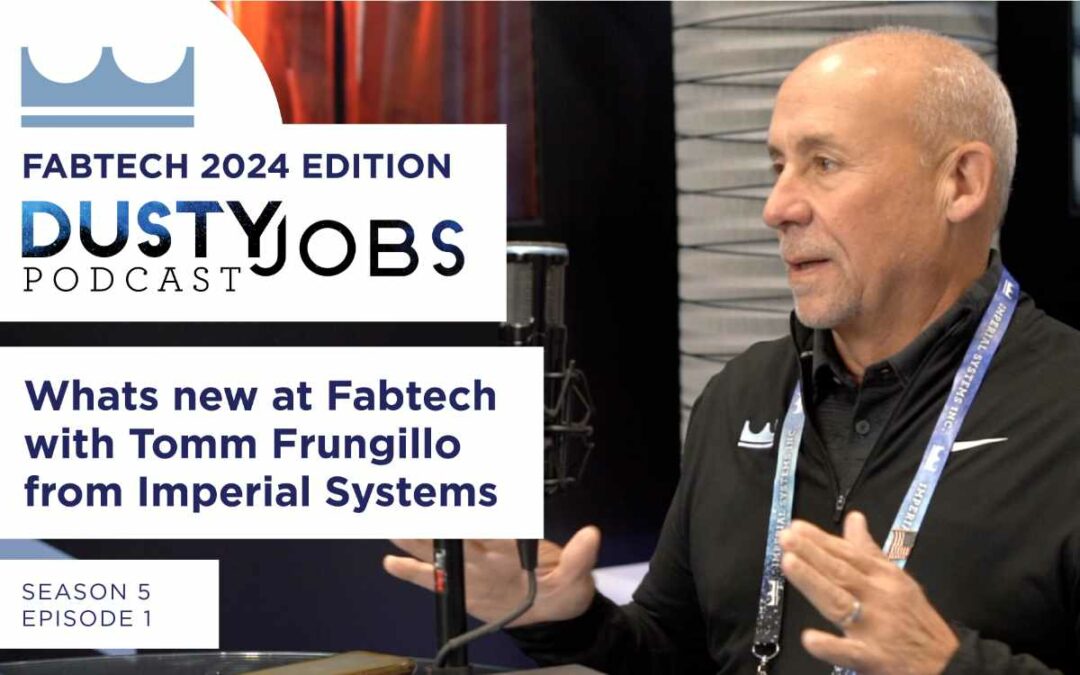
This is the Dusty Jobs Podcast episode from Fabtech Orlando 2024. In this episode we talk with Tomm Frungillo. Tomm talks about the booth and all that Imperial Systems has in their booth this year. He also talks about a new product the Shadow Ambient collector that can go into any shop to help clean the air. Donovan also gets excited about our model train and model building that we have in our booth.
Narrator: Welcome to the Dusty Jobs podcast from Imperial Systems. Industry knowledge to make your job easier and safer.
Donovan: Hello, welcome to another episode of the Dusty Jobs podcast. We are at Fabtech 2024.
Tomm Frungillo: We are.
Donovan: And so far it’s been a good show. We were a little worried coming down here. Tomm Frungillo is with me today our national sales manager. How’s the show going for you, Tomm?
Tomm: It’s good, Donovan, real good. Probably better than we expected. We didn’t know what to expect, like you said with the storm. Everybody knows about the hurricane, but Orlando was hit a little bit, not so bad. But the question is, when would they open up to let us in, to set up? There was some delay there, not a big delay. Everything’s gone smooth and the people that are here seem to be really interested in being here.
Donovan: And I’ll tell you what, even with a little bit of time delay on what the booth turned out great this year. It’s amazing. We have so many cool features this year. It’s totally different than anything we’ve done in the past.
Tomm: Yeah, it really is.
Donovan: We’ve got this really great big mezzanine where we can show people our dust collectors, show them the CMAXX, do a demonstration up there. And underneath it, I mean, I’m gonna let you talk about this, Tomm. This is just the coolest thing. So many people are checking it out.
Tomm: Yeah, well, to start with this booth design and configuration and the equipment we have in it is fantastic. It’s the best one we’ve ever done.
Donovan: Oh yeah.
Tomm: This is my, I guess, sixth or seventh with Imperial Systems and this is by far the best one. And I think it’s because of the configuration, we’ve got some new equipment in here. We’ve taken our traditional Shadow unit and made it into an ambient offering where we can collect ambient weld fume. And all plug and play in a beautiful little system and that’s been getting a ton of attention. And then a lot of our traditional equipment where they’re showing off our CMAXX and our standard Shadow and our Air-Port and Spark Traps and everything the metalworking world needs.
Donovan: But we’ve got a train set.
Tomm: We do and I’m getting to that.
Donovan: My gosh, okay.
Tomm: You can’t go for the kill up front. You gotta build up to it.
Donovan: I didn’t mean to steal your thunder, Tomm.
Tomm: So in addition to all of that cool stuff, we have a train set. We have a guy that does installation work for us, as you know.
Donovan: Yep.
Tomm: Great guy and as a hobby he does models and he does trains and he does models with trains and does amazing work.
Donovan: It’s great.
Tomm: So several of us, our great marketing team and us we got together several months ago and said, maybe that would be a cool thing to put at Fabtech. What would that look like? So as it turns out, as you said, we’ve got a mezzanine with a CMAXX dust collector, a mezzanine to work to access it all above.
Donovan: Yep.
Tomm: But below that, we have this train set and model. And the model happens to be of our shop, as you know, in Mercer, Pennsylvania.
Donovan: Yeah, it’s great, yeah.
Tomm: So it really turned out, we were all watching it being built and it’s like, man, this is kind of cool, but what’s it going to look like and how are the details going to be and what are we really going to end up with? And quite honestly, even the last time I saw it, which was about a month and a half ago maybe, it was really looking good. But it was like this thing needs to have a little bit more. And by the time I got here a couple days ago and we had it all set up, it just really exceeded my expectations of what it was going to be.
Donovan: I’ve watched five people take a picture of it since we’ve been sitting here talking so far.
Tomm: Yeah, yeah.
Donovan: And the cool part about our shop for me is that it kind of gives you an X-ray of our shop, you’re looking through it like you’re Superman. And it’s so great because our shop has so many different types of fume collection in it for ourselves.
Tomm: Right.
Donovan: We’ve got the ambient system. We’ve got a robot cell. We’ve got it on our laser table. We’ve got it on the plasma table. And Brian and the marketing team were able to take all that, miniaturize it. So that we’re able to show people here at the show an actual facility of what dust collection looks like in our facility. Not just the actual equipment here, but they can see how it might look in their own shop. And I think that’s just great.
Tomm: It is. And I’ve, people that we, we love people coming to our shop, right? And then it sells itself to some extent. And so, but a lot of people that are at the show, I’ve said, you know, for a couple years now, we need to get you up there. We need to get, well, I’ll tell you what, why don’t you just come to the booth. And I’ll show you what our shop looks like in miniature scale. And it’s been a big hit, you know, in addition to all the ones you mentioned, we have the powder coat booth.
Donovan: That’s right.
Tomm: That’s there with dust collection on it. So we really kind of cover so many things that are here for people at the show. It’s showing them our shop at the same time. Plus it’s fun, I mean it’s a train. And we have a restaurant and a bar at the end of the train track.
Donovan: There’s a little town.
Tomm: It’s a little town and it’s just so cool. And I’m guessing the marketing team, Scott and Erin, are probably going to put maybe some pictures together when this comes out. So we flash to it so people can see what we’re talking about.
Donovan: And there’s a, I know Justin did a video already of the whole booth. So if you’re watching this on YouTube, you could probably find that video or on Facebook too.
Tomm: Yes.
Donovan: So, but, all right, so that’s the booth. But I want to go back. I want to talk again about the new shadow ambient collector.
Tomm: Yes.
Donovan: Okay. So, tell me how is this different than just a regular Shadow? What am I getting different? Is it just have a pipe on it? What’s the big difference between it and our standard Shadow?
Tomm: Well, the beauty of it is there’s so many great things about the standard Shadow, right? Our vertical cartridge nature, our Safety Pentagon, all these things that I won’t go into all that now. But it takes that beautiful Shadow box and just to go back even further, you know, why is it called a Shadow, right? So it’s called a Shadow because in this industry, people wanted something that sat in the Shadows. You turned it on, it worked, you turned it off, it didn’t like your lights. They wanted a light switch, dust collector. And so we said, why don’t we call it the Shadow? It sits in the shadows. It is black, you know, which most people like in this industry. And so the Shadow itself works so well as a fume collector. But as you know, a lot of people love the plug and play nature, but they just want ambient filtration. In other words, not source capture, not the ambient racetrack push-pull system.
Donovan: Right.
Tomm: But a collector that just sits there and works on its own, pulling in ambient air and blowing out clean air. So we said, let’s take that Shadow, we’ve already got it perfected. All we have to do is take an intake, raise it up to where most of that weld smoke sits, somewhere between 12 and 15 feet, right? Most of the weld smoke sits right there. We’ll pull it from there. We know we can cover a 7 to 8,000 square foot area with one of these, based on how we have this size. We pull it in, goes through, it gets cleaned, it gets filtered. It gets pulse cleaned when it gets up to a certain differential, it cleans itself. And then we just spit out clean air right there in the facility. It’s all plug and play, bring it in with a forklift, set it, run your power, run your compressed air, and it’s ready to go. Simple.
Donovan: So it’s the Shadow, it’s got a collection unit high, where we have that hover zone for weld fume.
Tomm: Correct.
Donovan: Pulls it in, cleans it, pumps the air back out low?
Tomm: It does. It does. Takes it in high, pumps it out low, even real nice distribution, diffuser plate to distribute it evenly throughout the floor.
Donovan: Now is that a piece that’s hanging off the side of it, or is it just like-
Tomm: It’s flush. >>
Donovan: It’s tight up against it?
Tomm: It is, it’s basically flush mounted. So we built onto the Shadow just a little bit of a plenum. And then did a nice diffuser to kind of, the air’s running slow, it comes out, it’s quiet, just a nice diffused air, clean air coming back in your shop.
Donovan: The actual footprint of it then, it didn’t really get that much bigger, is what you’re telling me.
Tomm: It did not, inches bigger, inches bigger is all. So it really, and as you know, we’ve had tremendous interest in this. Because there’s others, types that are similar on the market, but nothing that has taken all the great things about the Shadow and then the nice innovation that we added to it to make it something that’s really kind of better than anything that’s on the market.
Donovan: Yeah.
Tomm: And reasonably priced.
Donovan: And you know what, here’s the thing I like about it, is our industry, there’s a lot of people who are growing. Shops are growing, they’re getting more people. So we’ll meet people each year at the show. And last year they had three welders working for them, they have six welders working for them this year. And as those company grow, they can take this unit, if they got to move into a bigger facility, they just buy another one.
Tomm: That’s right.
Donovan: And put it there, so it can grow with you. It’s not like, now we move somewhere else. We got to leave this piece of equipment behind, it was an investment we made. Now we have to re-figure out our whole system.
Tomm: That’s right.
Donovan: You just, as you grow, you just get another one.And then you can just get another one, or maybe you get a robot, and you can get another Shadow dedicated to that. So that’s what I love about it.
Tomm: Well it is, and then for companies that are on tight budgets, right? They may have some areas of their shop are a little more heavy in air pollution from welding and grinding and other things than other areas of their shop. They may want to ventilate and filter all their air in their shop. But they may not have the budget to do that. So let’s set one here this year, or two here this year. We can do two more next year, we can do two more after that. And invest a relatively small amount of money now as opposed to a large amount of money that a bigger system requires.
Donovan: You know what’s also great about it, Tomm? With the fork pockets and the lugs on top, you aren’t set to this one spot. They can move it in their shop.
Tomm: Yes.
Donovan: To say, okay, well, it’s actually working a little better over here. It’s working a little better over there.
Tomm: Sure you can.
Donovan: And you can kinda dial it in to where your most trouble areas are.
Tomm: Yeah, I mean, and no duct work, so you can put it and change it. Obviously, you have to change a little bit of your wiring and your compressed air run, no matter where you put it. But most plants, that’s pretty minor. Pretty minor change.
Donovan: You get that new piece of equipment, you gotta change your flow. It’s not a huge rip out. It’s not, you just pick it up, you move it, you got to the new spot where you gotta move your guys.
Tomm: Simple, inexpensive with all sorts of options.
Donovan: And all that’s doing in the end is that’s helping people go home healthier, safer to their families at the end of the day. And that’s all we’re trying to do here at Imperial is keep that up.
Tomm: Anybody that has been around weld at smoke for any length of time knows that it’s not a good thing and it affects every part of your body. And over time, it’s very unhealthy, so these things do that along with it. That’s why we’re in business, right? To improve the health, safety, and quality of people’s lives.
Donovan: Right.
Tomm: By making the best equipment on Earth. That’s what we do. It’s our mission statement. This is just adding to that.
Donovan: Yeah, I love that it’s just that other simple next step that we can do. To help a small business owner. To help someone who’s just trying to get started. That they don’t have to have their employees be sick or deal with all that. They can really just start out small and then when they grow, we can grow with them.
Tomm: Yeah, and we have that here at the show. There’s the big companies, there’s the Caterpillars and the Komatsu and all the huge companies. And then there’s the small guys, right? And this along with all our equipment can work for both of those types of companies. We can take care of the large big companies that have dozens of welding cells and grinding booths and whatever they’re doing. And we can handle mom and pop too. In a good way. Yep. So that’s what we do.
Donovan: So that’s super exciting. That’s our new stuff we got going on this year. We still have all the old stuff going on. If you have a chance to come up, I think the train’s going back to the shop. Is that where it’s going to be?
Tomm: That’ll end up in our showroom and it’s going to be very versatile to where when we have a customer coming in, we can do some things specific to that customer. Another little store, another little private labeled collector, another little whatever we can do.
Donovan: So it’s going to keep evolving?
Tomm: It’s going to evolve. And then our plan I’m sure is to bring it to next year’s Fabtech and it’ll be an evolved model. That’ll be bigger, better than ever.
Donovan: Yeah, maybe there’ll be an ambient Shadow in it next year.
Tomm: I’m sure there will be.
Donovan: There we go. There we go. Well, Tomm-
Tomm: By the way, we already sold the one that we have on the floor. We sold yesterday, so it didn’t take long for us to-
Donovan: Well, get them, they’re going fast.
Tomm: Yeah, I mean, that’s kind of, we can make a lot of them though, Don.
Donovan: Yeah, we got more?
Tomm: We can do more.
Donovan: We got more for sale. That’s good.
Tomm: We know how to do it.
Donovan: That’s good. We’ll be making more shortly.
Tomm: That’s it. That’s it.
Donovan: Well, Tomm, thanks for taking a minute away from the booth to come talk to us. And we just really appreciate it. So if you’re listening, like us on all our social medias, Facebook, LinkedIn, come check us out on YouTube. And until next time, stay healthy and stay safe, and thanks for listening.
Tomm: Thank you.
Narrator: Thanks for listening to the Dusty Jobs podcast. Breathe better, work safer.
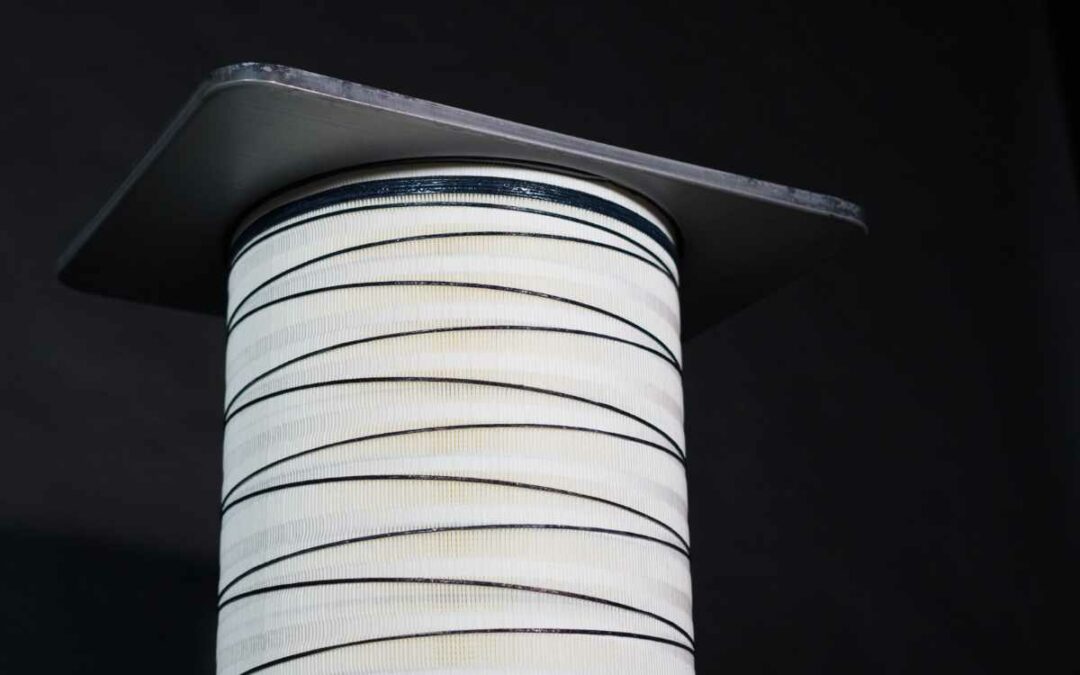
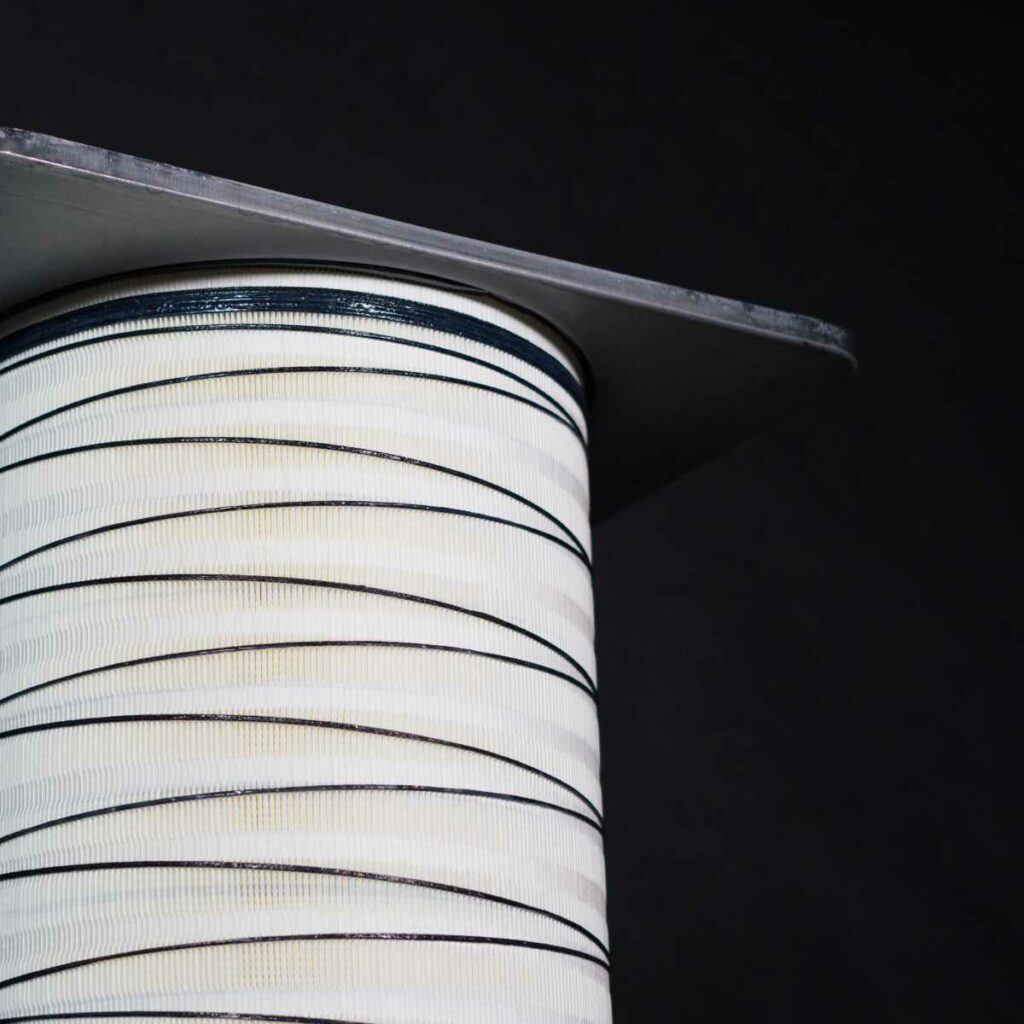
The expected lifespan of dust collector filters is one of the most common questions in the air filtration industry. Unfortunately, there is no one-size-fits-all answer to how long these filters last because their longevity depends on several variables. These include the type of dust being filtered, air volume, and system maintenance practices. Understanding these factors can help you maximize the life of your filters and ensure optimal system performance.
The Impact of Dust Type
One of the primary factors affecting dust collector filter life is the type of dust your system handles. Dust with abrasive or aggressive properties can wear down filters more quickly. While lighter, less damaging particulates tend to allow for longer use. For example, filters handling fine sawdust in a woodworking shop may outlast those dealing with similar machines in a metal shop. Knowing the nature of your dust is key to selecting the right filter and anticipating its lifespan.
Air Volume and Its Effect on Filters
Air volume also plays a significant role in determining filter longevity. A higher air volume can lead to faster accumulation of dust on the filter surface. This not only increases the frequency of filter cleaning but can also result in quicker wear and tear. Ensuring that your dust collection system is sized correctly for your needs can mitigate this issue. It prevents the system from working harder than necessary.
Maintenance: The Unsung Hero of Filter Longevity
Regular preventative maintenance is critical for getting the most life out of your filters. Neglecting maintenance tasks like inspecting for water leaks in ductwork and ensuring proper system airflow can significantly reduce the lifespan of your filters. Over time, dust accumulation and system inefficiencies can lead to higher stress on the filters, accelerating their deterioration.
One of the best practices for maintaining filters is using a differential pressure gauge to monitor the pressure drop across the filters. It can be either electronic or analog. Most dust collectors will come with a pressure gauge as a standard part. This is the most reliable indicator of when a filter has reached the end of its lifecycle. When the pressure drop exceeds 5 inches of water column, it’s time to replace the filters. This is regardless of how long they’ve been in use. Relying on this metric as opposed to a time-based parameter ensures you do not prematurely discard or use filters beyond their effective lifespan.
So, How Long Do They Last?
Given the wide range of applications and operating conditions, dust collector filters can last anywhere from a couple of months to a couple years. Systems filtering abrasive dust in high volumes with minimal maintenance will see shorter filter life. On the other hand, filters in systems handling less aggressive dust, paired with diligent maintenance, can last significantly longer.
Maximizing Dust Collector Filter Life
To extend the life of your filters, invest in regular maintenance, monitor pressure drop consistently, and tailor your dust collection system to your specific application. We suggest using a VFD (variable frequency drive) to automatically adjust airflow over the life of the filters. This VFD starts the fan at a slower speed when the filters are new and increases power as the filters build a dust cake and pressure drop. The second benefit to the VFD is an overall decrease in power consumption. These steps not only optimize filter performance but also reduce operational costs over time. By paying attention to these factors, you can make informed decisions and ensure your dust collection system operates efficiently for as long as possible.
A dust collection professional can help ensure that you see optimal filter life. The team at Imperial Systems will design a system with proper air volume, suggest the best media for your application, and even provide regular dust collector maintenance.
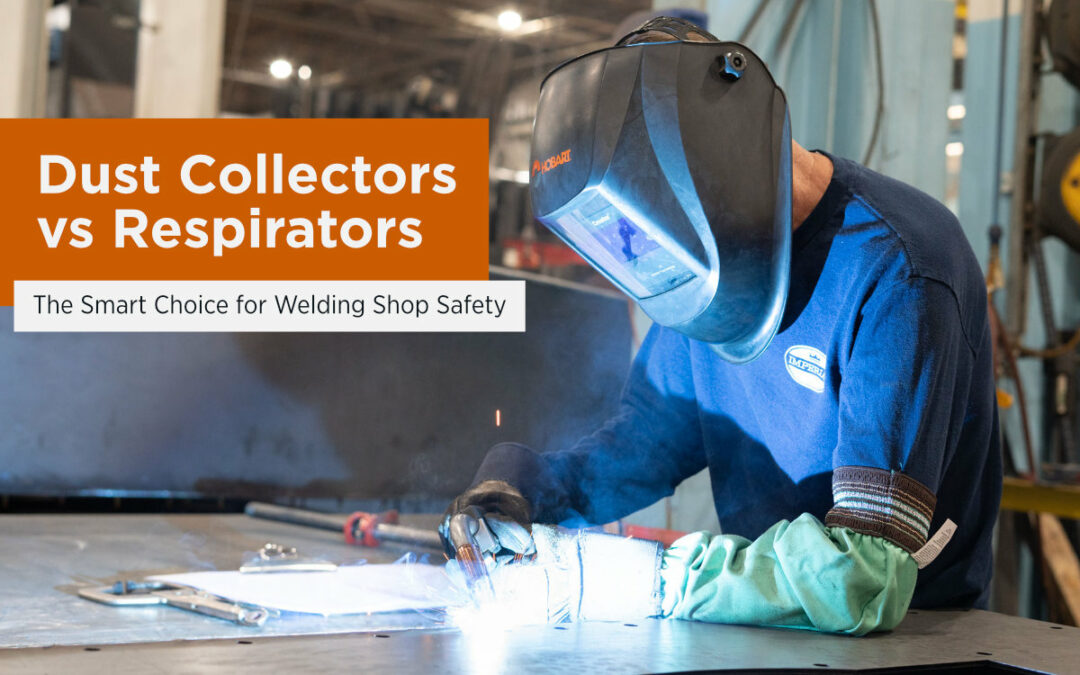
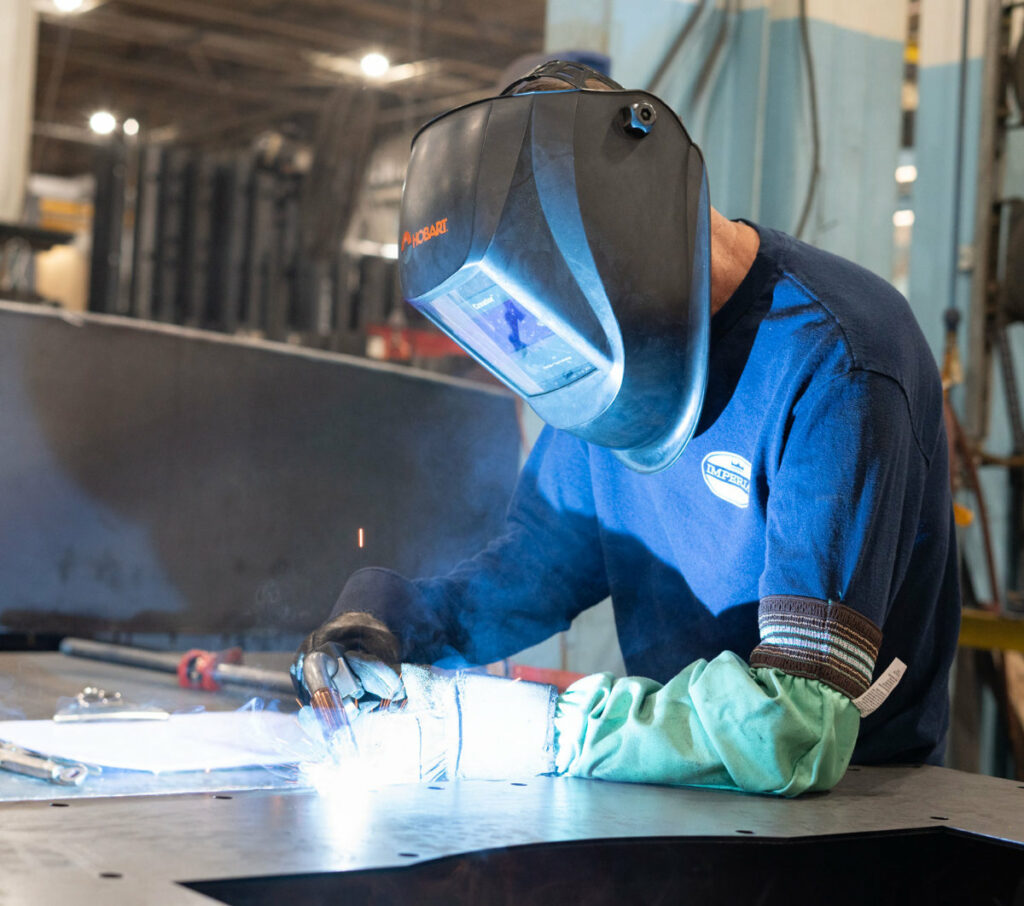
In a welding shop, maintaining a safe and healthy work environment is a top priority. Welding generates harmful fumes and particulates, which can pose significant health risks to employees if not properly controlled. To mitigate these risks, some shops rely on respirators. These respirators may be a part of the welding helmet. They may also be a separate PPE device to wear under the helmet. Other companies may invest in comprehensive dust collection systems. While both options offer protection, a dust collection system is the superior choice for several key reasons.
Comprehensive Air Quality Control, Unlike Welding Respirators
Welding respirators provide individual protection by filtering harmful fumes and particulates directly at the source. However, they limit coverage to the welder wearing the device, exposing others in the shop. This is similar to fume arms which capture fumes at the source but are often cumbersome to move and only protect the person working directly beneath them.
A dust collection system means that even employees who aren’t wearing respirators, such as those performing other tasks nearby, are protected from exposure to hazardous air contaminants. The overall air quality in the shop improves, leading to a safer work environment for everyone.
Consistent Protection Across the Workspace
Welding respirators are designed to protect the wearer by filtering the air they breathe. However, the effectiveness of these devices can vary depending on how well they fit, filter change frequency, and whether the wearer is using a mask consistently.
However, a dust collection system operates continuously, ensuring consistent protection across the workspace. It doesn’t rely on individual usage habits or require regular maintenance from each employee. Properly maintaining the system provides reliable, ongoing protection against airborne contaminants. This reduces the likelihood of employee exposure and potential health issues.
Enhanced Productivity and Comfort
Wearing a welding respirator can be cumbersome and uncomfortable, particularly during long work shifts. The added weight and bulk of the filtration unit can cause fatigue, reducing productivity and increasing the likelihood of mistakes. Employees may also be tempted to remove their masks for brief periods, exposing themselves to harmful fumes.
In contrast, a dust collection system improves comfort and productivity by keeping the air clean without requiring any additional gear. Employees can work more comfortably and efficiently, knowing that the air they breathe is safe, without the need for heavy, restrictive equipment. This leads to fewer interruptions, higher productivity, and a more pleasant work environment overall.
Long-Term Cost Savings Over Welding Respirators
While respirators may seem like a cost-effective solution in the short term, they can become expensive over time. Filters need to be replaced regularly, and the devices themselves may need frequent maintenance or replacement. Additionally, the potential costs associated with employee health issues due to inadequate air quality control can be significant.
A dust collection system, although it requires a larger initial investment, offers long-term cost savings. It reduces the need for individual protective equipment, lowers the risk of health-related expenses, and extends the lifespan of tools and equipment by minimizing exposure to corrosive fumes and dust. Over time, the system pays for itself through improved efficiency, reduced maintenance costs, and a healthier workforce.
While welding respirators provide a level of individual protection, they fall short when compared to the comprehensive benefits of a dust collection system. A dust collector not only improves air quality for the entire shop but also enhances productivity, comfort, and long-term cost savings. For any welding shop serious about safety and efficiency, investing in a dust collection system is the clear and superior choice. Reach out to an Imperial Systems representative to discuss the best welding filtration solution for your facility.
In industrial settings, dust collection systems are essential to maintain compliance with regulations. But they also offer substantial cost-saving benefits. Implementing an effective air filtration unit can lead to reduced downtime, improved product quality, and enhanced worker safety, ultimately translating into significant financial savings.
Reduced Downtime
One of the most immediate and tangible benefits of dust collection systems is the reduction in downtime. Industrial processes that generate large amounts of dust and particulates often suffer from frequent machinery breakdowns and maintenance issues. Dust accumulation can clog machinery, reduce efficiency, and lead to unexpected breakdowns. By capturing dust at the source, dust collection systems prevent these issues, ensuring that machinery operates smoothly and efficiently.
Extended Equipment Life: Dust can cause wear and tear on machinery. Consequently, this leads to more frequent repairs and replacements. Air filtration units benefit the operational life of the equipment. They do so by keeping it cleaner and reducing the abrasive effects of dust particles.
Reduced Maintenance Costs: Frequent maintenance is not only costly but also time-consuming. However, by minimizing dust accumulation, dust filtration systems reduce the need for regular maintenance. As a result, this lowers labor costs and allows maintenance staff to focus on other, more critical tasks.
Increased Operational Efficiency: Clean machinery operates more efficiently. Dust collection systems ensure that machines function at their optimal capacity. This reduces the risk of slowdowns and ensures consistent production rates. Therefore, the increased efficiency translates directly into higher productivity and lower operational costs.
Improved Product Quality
Dust can significantly impact product quality, especially in industries where precision and cleanliness are paramount. Contaminants can certainly lead to defects, paint blemishes, rework, and even product recalls. All of these are costly and also detrimental to a company’s reputation. Consider these benefits:
Enhanced Product Consistency: Dust contamination can cause variations in product quality. But by maintaining a clean production environment, dust collection systems help ensure that products meet consistent quality standards, reducing the risk of defects and improving customer satisfaction and loyalty
Reduced Waste and Rework: Defective products often need to be reworked or discarded, leading to increased material costs and wasted labor. By preventing dust contamination, air filtration systems minimize the need for rework, reducing waste and saving resources.
Compliance with Quality Standards: Many industries have stringent quality standards that must be met to maintain certifications and comply with customer requirements. Dust collection systems help ensure that production environments meet these standards. This avoids costly fines and ensures that products can be sold in regulated markets.
Additional Dust Collection Benefits
Beyond reducing downtime and improving product quality, dust collection systems offer several other cost-saving benefits:
Enhanced Worker Safety and Health: Dust collection systems play a crucial role in protecting worker health by reducing airborne dust and improving air quality. Healthier employees mean fewer sick days, lower healthcare costs, and higher productivity.
Energy Savings: Efficient dust collection systems can also contribute to energy savings. By maintaining clean air and preventing dust buildup, these systems help ensure that HVAC and ventilation systems operate more efficiently, reducing energy consumption and lowering utility costs.
Regulatory Compliance: Non-compliance with environmental and safety regulations can result in hefty fines and legal fees. Dust collection systems help businesses stay compliant with regulations, avoiding these costly penalties and the possibility of a forced shutdown.
Investing in a dust collection system is not just about meeting regulatory requirements. It’s also a strategic decision that offers significant cost-saving benefits. By reducing downtime, improving product quality, and enhancing worker safety, dust collection systems help businesses operate more efficiently and profitably. Furthermore, the initial investment in a dust collection system is quickly offset by the long-term savings and operational improvements it provides, making it a wise choice for any industrial setting.